
Water Damage Restoration Cost in Arlington, WA: 2026 Price Guide & Checklist

The true price of a flooded room isn't found on a standard estimate; it's hidden in the hours of delay that turn a simple dry-out into a full-scale structural reconstruction. You're likely standing on damp carpet or staring at a water-stained ceiling right now, feeling the weight of uncertainty about the final water damage restoration cost Arlington specialists might quote. It's natural to feel overwhelmed by the technical jargon of insurance adjusters and the fear of long-term mold growth affecting your home's integrity.
This guide provides a transparent breakdown of how water categories and professional mitigation timelines influence your recovery budget. You'll gain a clear understanding of the 2026 price drivers in the Puget Sound region, along with a step-by-step checklist to stabilize your home immediately. We'll explore the latest Washington State insurance regulations and show you how to identify a licensed professional who acts as your advocate. Our goal is to help you move your property from chaos back to a high-quality finished state with as little friction as possible.
Key Takeaways
Learn why responding within the first 24 hours is the most effective way to manage your water damage restoration cost Arlington and prevent expensive secondary mold issues.
Understand the critical differences between water mitigation and full reconstruction to ensure your home is both stabilized and eventually returned to its high-quality finished state.
Discover how water quality categories—ranging from clean pipe bursts to contaminated grey water—directly dictate the specialized sanitation and equipment required for your project.
Access a professional recovery checklist that prioritizes immediate safety and the thorough documentation needed to streamline your insurance claims process.
Find out how an experienced specialist acts as your project manager and advocate to remove the friction and complexity typically associated with third-party negotiations.
Table of Contents
Understanding the Variables of Water Damage Restoration Cost in Arlington
Categorizing the Damage: How Water Quality Impacts Your Estimate
Mitigation vs. Reconstruction: Balancing Immediate Cleanup with Long-Term Repair
The Essential Water Damage Recovery Checklist for Arlington Homeowners
Navigating Insurance Claims and Choosing an Arlington Specialist
Understanding the Variables of Water Damage Restoration Cost in Arlington
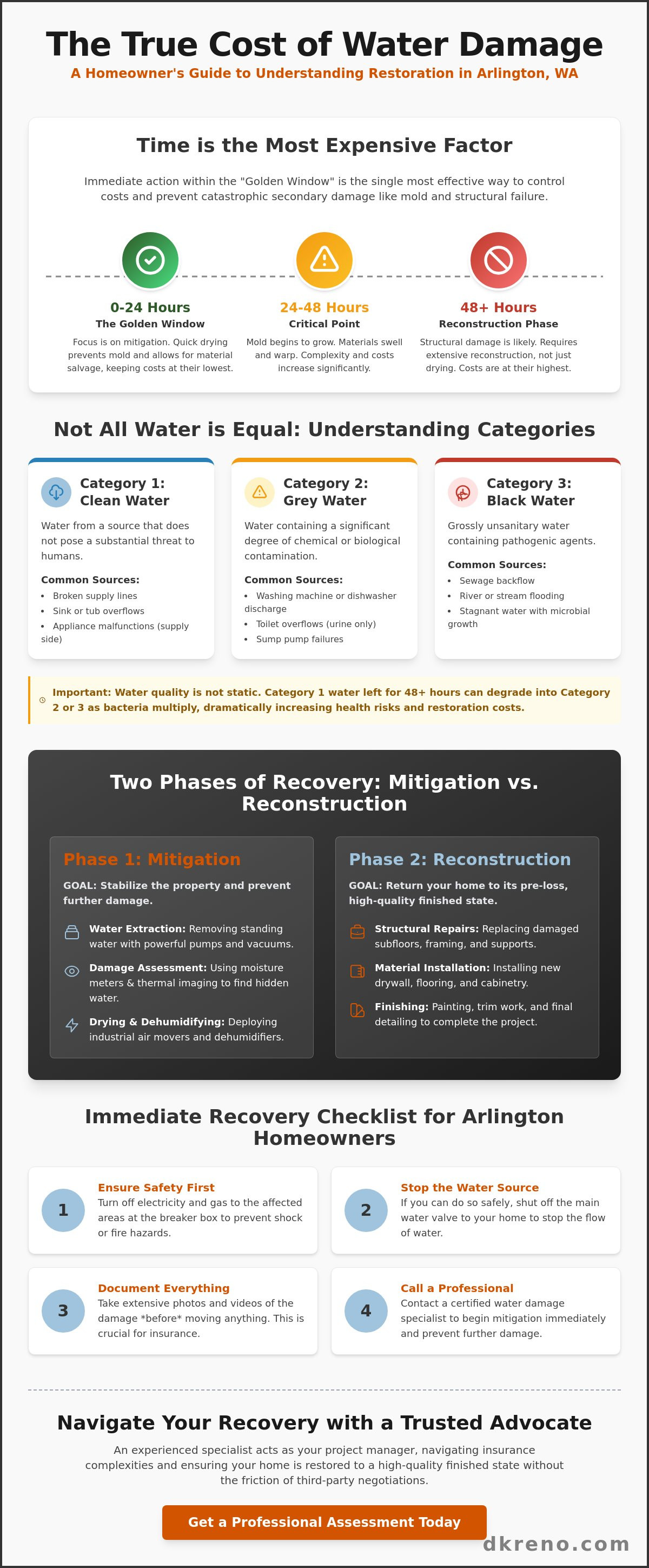
When you discover standing water in your home, the clock becomes your most expensive opponent. Professionals call the first 24 to 48 hours the "Golden Window" because this is the period where immediate mitigation can prevent permanent structural failure. Acting quickly during this timeframe is the single most effective way to control the overall water damage restoration cost Arlington homeowners face. If water sits longer than two days, it often transitions from a straightforward drying project into a complex reconstruction effort involving multiple rooms.
A common misconception is that the price of recovery is solely based on the size of the affected room. In reality, a small upstairs bathroom leak that seeps into the subfloor and the kitchen ceiling below often requires more resources than a large, unfinished basement with a clean puddle. We utilize specialized moisture meters and thermal imaging cameras to find water where the human eye cannot. These advanced tools ensure every pocket of moisture is addressed, which provides the peace of mind that your home's foundation remains secure and dry.
How the Scope of Damage Impacts Your Estimate
The complexity of a project depends heavily on the categories of water damage and how deeply the liquid has penetrated your building materials. Surface moisture on a hardwood floor is manageable, but deep structural saturation in porous subfloors requires industrial-grade dehumidifiers and high-velocity air movers. We often find hidden water paths behind drywall or tucked under kitchen cabinetry where moisture can stagnate. If this isn't extracted immediately, secondary damage like mold growth begins to develop, which exponentially increases the scope of work and the final restoration bill.
The Arlington, WA Climate Factor
Living in Snohomish County presents unique challenges for property recovery that national guides often overlook. Our local Puget Sound humidity levels mean that natural evaporation is rarely enough to dry a home; professional intervention is a necessity rather than an option. Arlington homes often feature specific Northwest architectural styles, such as complex crawlspaces or multi-level layouts, that can trap moisture in hard-to-reach areas. We also follow strict Snohomish County building codes during the reconstruction phase to ensure your home meets current safety standards. Choosing a contractor who understands these local variables helps move your project from chaos to order with fewer administrative delays and a higher quality finished state.
Categorizing the Damage: How Water Quality Impacts Your Estimate
Identifying the water source is the first step in building a reliable recovery plan that protects both your property and your family's health. The technical classification of the water found in your home directly affects the labor, safety protocols, and specialized equipment required for the job. This classification is a major component of the water damage restoration cost Arlington residents see on their final invoice. Understanding these categories helps you anticipate the complexity of the cleanup and the necessary steps to return your home to a high-quality finished state.
Category 1 involves clean water from sources like broken supply lines or sink overflows. These projects are typically the most straightforward to resolve and often allow for the salvage of more building materials. Category 2, often called grey water, comes from appliances like dishwashers or washing machines and contains chemical or biological contaminants. This level of damage requires professional sanitation to ensure your living space remains safe. Category 3 is the most severe; it involves black water from sewage backups or storm-driven groundwater. This category requires intensive biohazard removal and the disposal of most porous materials to protect your household from pathogens.
Time is a critical variable in these classifications because water quality is not static. If Category 1 water is left untreated for more than 48 hours, it can quickly transition into Category 2 or even Category 3 as bacteria multiply in the stagnant moisture. This shift adds significant complexity and cost to the cleanup process. For those facing the stress of a contaminated leak, seeking a professional restoration specialist early can prevent a minor incident from becoming a high-cost biohazard disaster.
Class 1 to Class 4: Measuring the Rate of Evaporation
Beyond the quality of the water, we also measure the "Class" of the loss, which describes the rate of evaporation based on the amount of wet material present. A Class 1 loss involves only a small area with little moisture absorption, while a Class 3 loss involves water coming from overhead and saturating entire rooms, including insulation and ceilings. Class 4 projects are the most technically demanding. Class 4 water damage involves low-porosity materials requiring specialized psychrometric equipment. These scenarios often involve high-end finishes like marble, stone, or specialized hardwoods that require a patient, methodical drying process to preserve your home's long-term value.
Sanitation and Safety Protocols
When dealing with Category 2 or 3 losses, our team prioritizes rigorous standards of performance through the use of industrial-strength antimicrobial treatments. These steps are necessary to neutralize pathogens and prevent the long-term structural issues that can arise from deep-seated contamination. We utilize professional-grade Personal Protective Equipment (PPE) to manage these biohazards safely, which is a standard part of project billing for high-risk environments. This protective gear and the specialized cleaning agents are essential for a thorough decontamination process that provides true peace of mind. If you are concerned about whether your specific policy covers these biohazard protocols, you can find helpful flood insurance information on official government sites to help guide your next steps.
Mitigation vs. Reconstruction: Balancing Immediate Cleanup with Long-Term Repair
Understanding the distinction between mitigation and reconstruction is essential for managing the total water damage restoration cost Arlington homeowners encounter during a property crisis. Mitigation is the immediate, emergency response designed to stabilize your property and prevent further destruction from taking hold. Reconstruction is the subsequent phase where we rebuild the affected areas to their original state, or even better. By choosing a single partner to manage the full duration of both phases, you eliminate the friction of coordinating multiple vendors and ensure a seamless transition from a state of chaos to a high-quality finished home.
A comprehensive, full-service approach acts as a competitive differentiator by streamlining administrative coordination and reducing the overall timeline of the project. When one team handles everything from the initial extraction to the final coat of paint, there is a higher level of accountability and a more cohesive vision for the end result. This partnership provides the relief and peace of mind you need when your home's integrity is at stake. It allows us to act as your dedicated project managers, assuming the burden of the crisis so you can focus on your family's well-being.
The Mitigation Phase: Stopping the Bleeding
The mitigation process begins with high-volume water extraction and the deployment of industrial dehumidification systems to lower the humidity levels in your residence rapidly. We utilize advanced thermal imaging and moisture meters to monitor structural drying progress, ensuring that every layer of your flooring and subflooring is verified dry. This phase often requires the surgical demolition of non-salvageable materials like wet insulation or saturated carpet pads to prevent stagnant moisture from lingering. These aggressive steps are vital for preventing secondary damage, as detailed in the EPA guide to mold cleanup, which protects your household from the long-term risks of microbial growth.
The Reconstruction Phase: Returning to Normalcy
Once the structure is certified dry and safe, the focus shifts to restoring the aesthetic and functional beauty of your Arlington residence. This transition allows you to move beyond simple repairs and consider how professional reconstruction can actually increase your home value through modern, resilient upgrades. Many of our clients find that the restoration period is an ideal time to remodel their kitchen or bathroom, turning a stressful event into a form of total renewal. We prioritize architectural continuity throughout the project, ensuring that new materials blend perfectly with your existing home design while meeting the latest Snohomish County safety standards.
The Essential Water Damage Recovery Checklist for Arlington Homeowners
Managing a property crisis requires a methodical approach to prevent the situation from spiraling into a long-term structural issue. By following a structured checklist, you can protect your investment and potentially lower the total water damage restoration cost Arlington experts will need to manage during the recovery process. We act as a stabilizing force during these high-stress moments, providing you with a clear, safety-conscious path toward total renewal and peace of mind.
Step 1: Ensure safety and shut off the water source immediately. Locate your main water shut-off valve, which in many Arlington residences is found in the crawlspace or near the front of the property.
Step 2: Document everything with photos and videos for insurance purposes. Capture the full extent of the standing water and any visible damage to building materials before any cleanup begins.
Step 3: Contact a local Arlington restoration specialist before the adjuster. Having a professional advocate on-site early ensures that hidden moisture paths are identified and documented for your claim.
Step 4: Protect salvageable items by moving them to a dry, ventilated area. This prevents secondary damage like wood rot or permanent staining on your personal belongings.
Step 5: Review your insurance policy for "Loss of Use" and "Replacement Cost" coverage. Understanding these terms helps you manage expectations for temporary housing and the quality of materials used in your reconstruction.
Immediate Actions to Minimize Cost
Your first priority should be neutralizing hazards by turning off the main water valve and the circuit breakers in affected areas. It is vital to avoid using household vacuums to extract water, as these devices are not designed for wet environments and pose a significant electrical risk. To protect your furniture, lift any skirts and place aluminum foil or plastic coasters under wooden legs to prevent permanent stain transfer to your flooring. These simple, disciplined actions help move the project from chaos to order while preserving as much of your original home as possible. If you need immediate professional guidance to stabilize your property, you can contact our restoration team for expert assistance.
Documentation for a Frictionless Claim
Creating a comprehensive inventory of damaged personal property is a critical step in ensuring a frictionless experience with your insurance provider. Keep a detailed log of every communication with your insurance company and your contractors, noting the dates, names, and specific instructions provided. Detailed photo documentation is the most effective way to justify restoration costs to an insurance adjuster. This methodical record-keeping establishes professional credentials for your claim and ensures that no detail is overlooked during the transition from initial planning to final completion.
Navigating Insurance Claims and Choosing an Arlington Specialist
The insurance process often feels like a second disaster following a flood, but it doesn't have to be a source of stress. We act as your dedicated project managers and advocates throughout the entire duration of the claim, ensuring that no detail is overlooked by your provider. A primary part of our service is providing the technical evidence needed to justify the water damage restoration cost Arlington homeowners are quoted, ensuring your policy works for you. We use Xactimate, the industry-standard pricing software utilized by major insurance adjusters, to create transparent, localized estimates that align with carrier expectations and remove friction from the approval process.
You have the legal right to choose your own contractor rather than being forced to use an insurance company's "preferred vendor." While those vendors often prioritize the insurer's cost-saving goals, a trusted local expert prioritizes the safety and long-term integrity of your home. Understanding the specific nuances of Arlington water damage is vital for claim accuracy, as regional factors like moisture levels and local construction styles dictate the necessary scope of work. We assume the burden of these complex administrative negotiations, acting as a stabilizing force that allows you to focus on your family's return to normalcy.
Working with Your Claims Adjuster
Our team provides the rigorous documentation and technical data adjusters need to approve a claim quickly. We use thermal imaging and moisture logs to prove the "sudden and accidental" nature of a loss, which is a critical distinction for coverage compared to "gradual" damage. It is essential that your final estimate covers the full scope of reconstruction, including high-quality materials and professional labor, rather than just the initial drying phase. This methodical approach ensures your home is returned to a high-quality finished state without unexpected out-of-pocket expenses.
Why a Local Arlington Specialist is Your Best Ally
A local specialist offers rapid response times that are essential for preventing mold growth in our humid Puget Sound climate. We are deeply familiar with the specific building permits and safety codes required by the City of Arlington and Snohomish County, which prevents costly delays during the reconstruction phase. This local expertise provides the peace of mind that comes from a partner who understands the Northwest landscape. By choosing a contractor who acts as your collaborative ally, you ensure a frictionless experience that moves your property from a state of crisis to a form of total renewal.
Reclaiming Your Home with Confidence
The path from property damage to total renewal is built on quick decisions and expert advocacy. By understanding that your water damage restoration cost Arlington is driven by the speed of professional intervention and the specific category of water involved, you've already taken the first step toward a controlled recovery. You now have the checklist needed to stabilize your home and the knowledge to navigate insurance negotiations with confidence. A seamless transition from emergency mitigation to high-end reconstruction is the most reliable way to ensure your property returns to its high-quality finished state without unnecessary friction.
Our team acts as your protective specialist, assuming the administrative burden of your claim while maintaining rigorous standards of performance. We provide expert insurance claim advocacy and a disciplined emergency response for Arlington and the Puget Sound region. Restore your home and your peace of mind; contact DK Production for an expert assessment today. You don't have to manage this crisis alone; we're here to be your collaborative ally until your home is restored to perfection.
Frequently Asked Questions
Does home insurance typically cover water damage restoration in Arlington?
Standard homeowners insurance in Washington generally covers water damage that is sudden and accidental, such as a burst pipe or a failed water heater. It's important to recognize that gradual leaks or damage resulting from a lack of maintenance are often excluded from basic policies. You should review your specific coverage for sewer backup riders and flood insurance, as these determine how much of the water damage restoration cost Arlington specialists manage will be covered by your provider.
How long does the water mitigation and drying process usually take?
The structural drying and mitigation phase typically lasts between three and five days to ensure all moisture is removed from deep within building materials. This timeline varies based on the volume of water and the porosity of the affected surfaces, such as drywall or hardwood. We monitor the progress daily with professional moisture meters to confirm the structure has reached a safe, dry state before any reconstruction begins.
Can I stay in my home during the water damage restoration process?
Whether you can remain in your home depends on the category of water involved and the extent of the drying equipment needed. Category 3 losses involving sewage or storm water often require relocation for safety and health reasons during the decontamination phase. Additionally, the industrial air movers and dehumidifiers used in the process can be loud and may disrupt your daily life, so we recommend checking your policy for "Loss of Use" coverage for temporary housing.
What is the average cost of water damage restoration for a flooded basement?
The total price for a basement recovery is determined by the size of the area and whether the space is finished or unfinished. Saturated drywall, carpeting, and insulation in a finished basement require more intensive labor and disposal than a simple concrete utility room. We provide transparent estimates using industry-standard software to ensure your insurance claim accurately reflects the professional work required to return the space to a high-quality finished state.
How do I know if I have hidden water damage behind my walls?
Hidden moisture often manifests through subtle signs like peeling paint, bubbling wallpaper, or a persistent musty odor that lingers even after cleaning. We utilize advanced thermal imaging cameras and non-invasive moisture probes to detect water pockets trapped within wall cavities without causing unnecessary damage. Identifying these hidden issues early is a critical step in preventing long-term structural decay and the development of mold.
Is it possible to save hardwood floors after they have been saturated with water?
Hardwood floors can often be successfully salvaged if professional drying begins within the first 24 hours of the incident. We employ specialized floor-drying mats and high-capacity dehumidifiers to extract moisture from the wood fibers and the subfloor beneath. This methodical approach prevents permanent cupping or crowning, which preserves your home's original architectural beauty and reduces the need for expensive material replacement.
What is the difference between a water mitigation company and a general contractor?
A water mitigation company focuses on the emergency stabilization of your home, including water extraction and structural drying. A general contractor typically handles the rebuilding of the space after the drying is complete. We provide a comprehensive, full-service approach that manages both phases, acting as your project manager and advocate from the initial crisis through to the final reconstruction.
Why should I hire a local Arlington company instead of a national franchise?
Local specialists provide faster response times and a deeper understanding of the specific humidity challenges found in the Puget Sound climate. We act as a collaborative ally with intimate knowledge of Snohomish County building permits and safety codes, which prevents administrative delays. This local expertise ensures a frictionless experience and a level of personal accountability that national franchises often struggle to match.


Comments