
Bothell Insurance Restoration Contractor for Fire and Water Damage

Are they licensed, bonded, and insured? For the bond requirement, according to Washington State Department of Labor & Industries, Washington requires general contractors to maintain a $30,000 surety bond as a condition of registration. A Bothell insurance restoration contractor also needs to assess the full impact of fire and water damage, not just what’s visible.
After a fire, firefighting water can leave moisture in building materials even when standing water is gone. A careful assessment and clear documentation help show what was affected and support an itemized estimate.
This article explains how restoration contractors assess fire and water damage, manage moisture, and document their findings. DK Production Restoration is a restoration company offering water mitigation, restoration, and reconstruction. You’ll learn what the assessment and documentation process involves, what information helps build an estimate, and how to understand the contractor’s role as the property moves from damage toward repair.
Table of Contents
Firefighting water extraction and structural drying
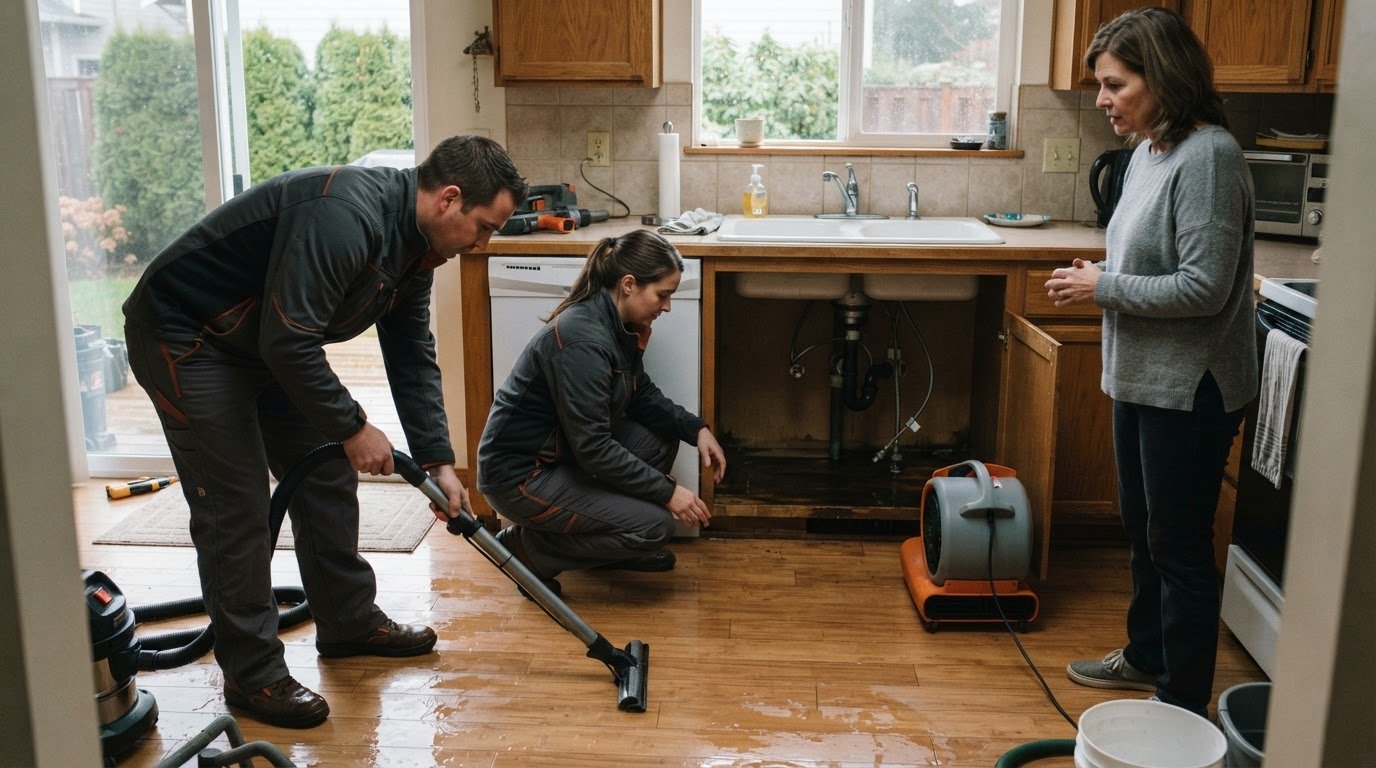
Fire suppression can leave standing water and moisture inside floors, walls, and other building materials. A Bothell insurance restoration contractor assesses visible water damage and checks for areas that may remain damp after firefighters leave. The first step is to identify affected rooms and materials, then extract standing water. This helps clarify the cleanup and drying work that follows.
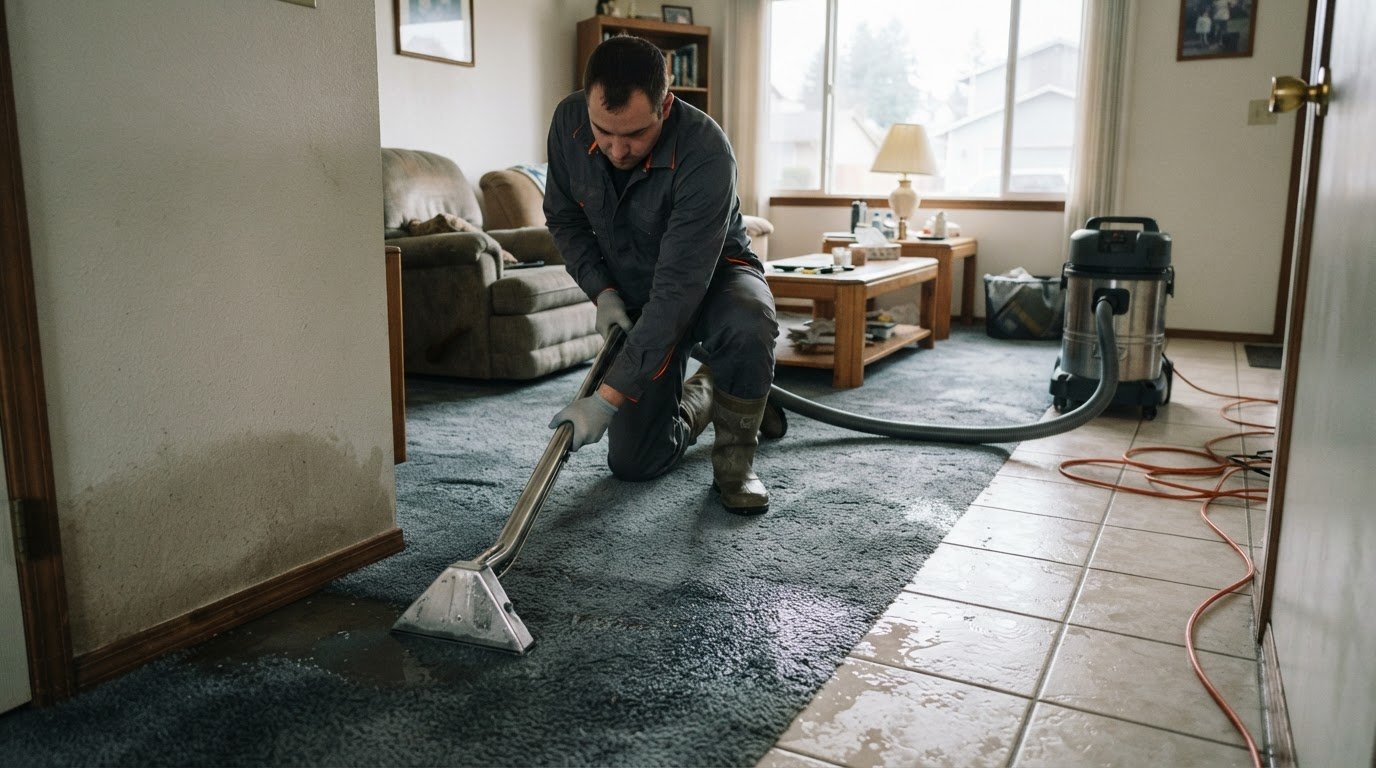
Water extraction and structural drying are related but distinct steps. Extraction removes pooled water, while drying addresses moisture in affected parts of the home. The restoration team tracks affected areas and progress, adjusting the work as conditions change. The time needed depends on the amount of water, the materials affected, and how far moisture has spread.
Timing matters after water intrusion: mold can begin growing within 24 to 48 hours. Homeowners dealing with water damage are advised not to wait for insurance approval before beginning water mitigation. A prompt emergency response can start water removal and drying while damage is documented. Restoration addresses the effects of a leak; stopping the leak itself is a separate need.
Does homeowners insurance cover water, fire, mold, and storm damage restoration in Washington? Coverage depends on the policy’s covered causes of loss, exclusions, and endorsements. Fire, a sudden pipe burst, storm water, and mold-related damage may be treated differently, so the documented cause and resulting scope matter.
What restoration services do Bothell contractors offer for water, fire, smoke, and storm damage? Work may include water extraction, drying, cleanup of fire- and smoke-affected areas, and reconstruction of damaged materials. Storm-related work can include removing water that entered the home and drying affected spaces. An assessment identifies which steps apply to the property.
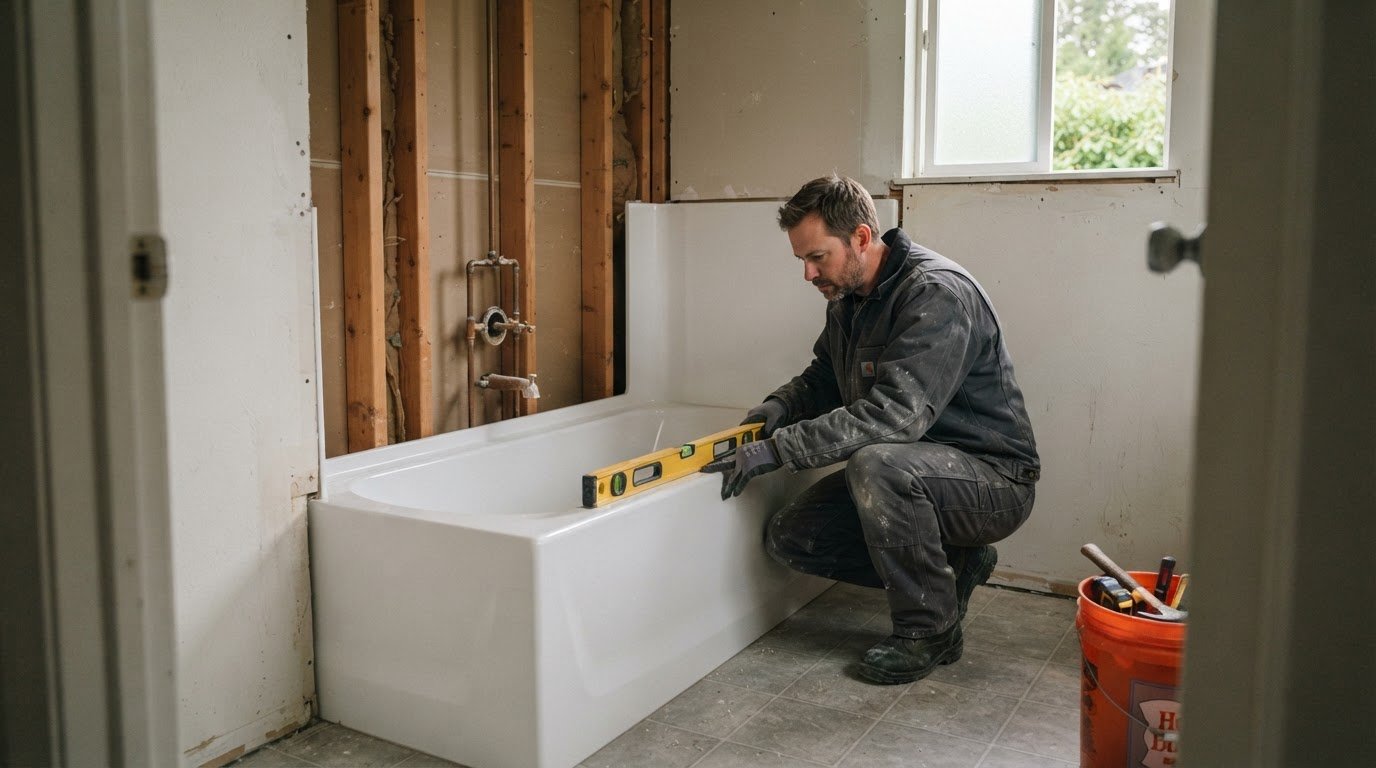
After a pipe burst, restoration may progress from water extraction to drying affected areas and reconstructing damaged parts of the home. The contractor records the affected materials and completed work, linking the restoration scope to the observed damage. If firefighting water reaches several rooms, documenting each area keeps the drying plan and repair estimate organized.
Registration is another concrete point to understand when comparing contractors. According to Washington State Department of Labor & Industries, Washington requires general contractors to maintain a $30,000 surety bond as a condition of registration. Bonding is not a substitute for a careful damage assessment, moisture management, or a clear work record. Together, those details help homeowners understand how emergency cleanup, drying, and reconstruction fit into the recovery process.
How restoration contractors document damage and prepare itemized estimates
After property damage, contractors assess safety, identify active water intrusion, and document affected areas before cleanup changes their condition. For a fire loss, photographs record the damage before items are moved or removed. This initial record can guide emergency cleanup and damage control, while providing a clear account of the conditions observed.
An itemized estimate connects each proposed task to a specific area and observed damage. A contractor may list water removal, material removal, cleaning, drying, and reconstruction separately instead of presenting one broad repair total. For example, a living-room entry might list damaged flooring separately from affected wall framing, making the proposed work easier to understand.
Useful documentation pairs photographs with room names, material descriptions, and notes about visible conditions. A wide photograph shows where damage occurred; closer images capture details such as staining, swelling, or smoke residue. Written notes can distinguish standing water from areas that have dried and identify materials needing further assessment. This detail connects observations to estimate items.
Hidden damage needs a careful record too. Moisture may extend beyond a visible stain, while fire and smoke effects can reach concealed surfaces. When inspection or approved removal exposes additional damage, the contractor documents the newly visible condition, its location, and the work needed to address it. Those records can support an estimate supplement by explaining why the proposed scope changed.
How can a restoration contractor help review an estimate and insurance claim scope in Washington? The contractor can compare documented conditions with the estimate, explain each task, and provide photographs or updated findings. The insurer determines coverage under the policy, while clear records help the parties discuss differences in scope.
Residential and commercial damage cleanup can involve different layouts, materials, and operational needs. In a home, documentation may track flooring, cabinets, and framing by room. A commercial space may require records organized by work area or use. In either setting, itemized notes should distinguish cleanup from repair so the estimate reflects the actual condition, not a generic package.
For fire damage repair, the record can connect smoke or heat effects with the materials proposed for cleaning or reconstruction. A contractor should describe the affected surface and the task rather than relying on a broad label such as “fire repairs.” If a certified specialist or report informs a specific finding, the estimate record should identify that source and explain its relevance.
Before approving a changing scope, review the documented condition, proposed task, and reason for each added line. A clear record helps homeowners understand how damage restoration moves from emergency cleanup to repair. For an overview of the home restoration process, consider how assessment and reconstruction fit together.
Bothell-area restoration contractor listings
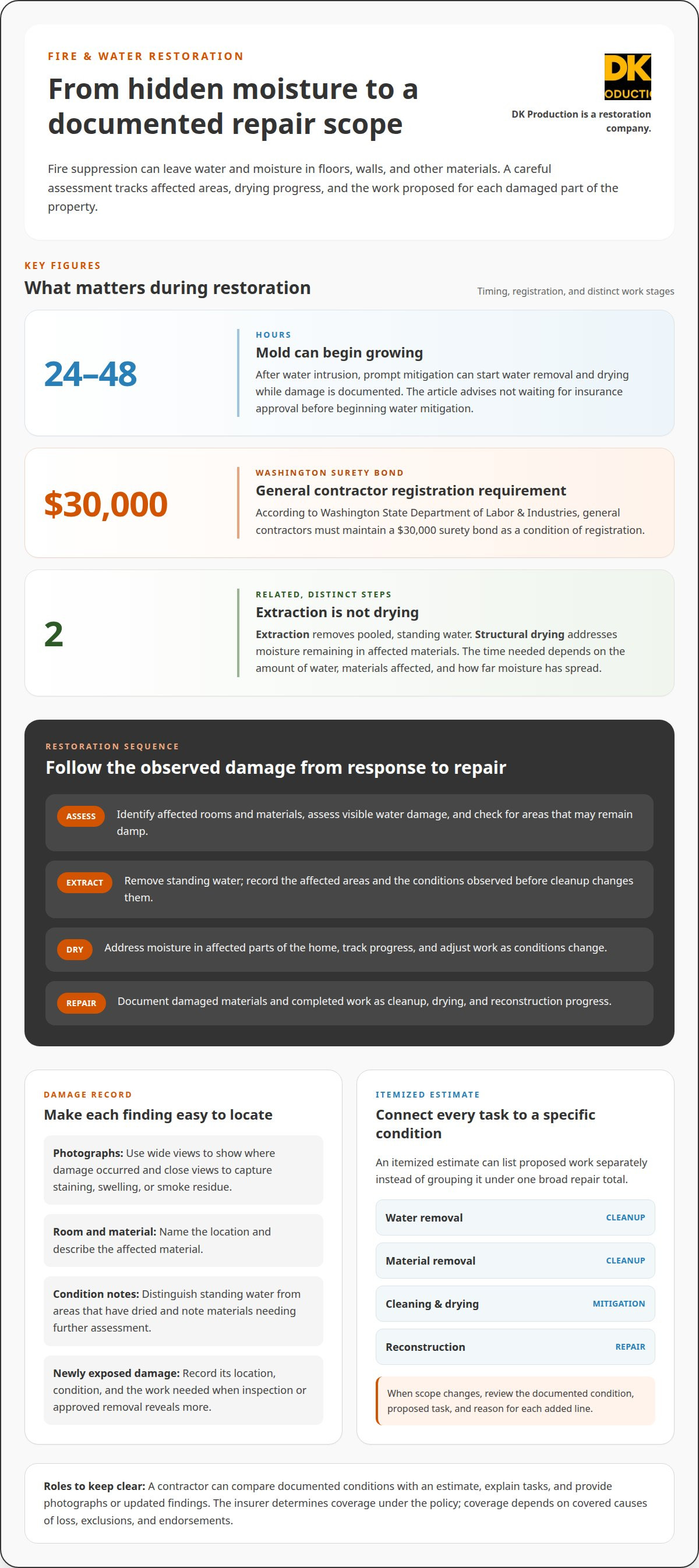
A Bothell contractor directory lists five contractors, while Washington lists 1,231 general contractors registered in Bothell. Those figures describe different pools, and neither number alone tells homeowners which firm handles fire or water restoration. A listing is a starting point, not a quality rating or proof that a contractor is the right fit for a specific loss.
Use each listing to compare the work your property needs. A contractor focused on water mitigation may offer a different scope from one handling fire cleanup and reconstruction. For example, a burst pipe can require moisture assessment, drying, and rebuilding, while smoke damage calls for a different cleanup and repair plan. Compare the proposed work, not just business names.
How do Bothell restoration contractors compare by reviews, certifications, and response time? Reviews can show patterns in communication and project follow-through, but they don’t establish the quality of a particular restoration job. Compare relevant credentials by their issuing organization and scope, then assess response details by the stated arrival or assessment plan rather than assuming a universal timeline.
For licensing, distinguish a directory entry from proof of current registration or authorization for the work involved. In Washington, general contractors may oversee work across building trades and hire specialty subcontractors. A project involving damaged framing and flooring, for example, may involve separate repair tasks. A useful listing should clarify who is responsible for coordinating the overall scope.
Credentials need context. A credential may relate to a specific restoration practice, but its name alone doesn’t show which work it covers. Consider its issuer, scope, and relevance to the damage. For fire cleanup or a moisture plan, connect the qualifications presented with the tasks and materials involved.
Reviews are most useful when they describe a situation similar to yours. Look for comments about documentation, communication, cleanup, or how rebuilding progressed. A broad rating offers less insight than a specific account of water damage, smoke cleanup, or reconstruction. Treat reviews as individual experiences, not a substitute for a written scope.
Response time needs practical context. Initial dispatch matters, as do the next steps: who assesses the damage, how findings are recorded, and how work moves from emergency control to repair. Water concerns can vary between Bothell properties near the Sammamish River and homes elsewhere, so the site conditions should shape the assessment.
For a sound comparison, put the listing, relevant review details, credential scope, response plan, and proposed work together. That approach gives homeowners a clearer basis for judging who can document the damage, manage the needed work, and rebuild affected areas without relying on a directory position alone.
Do Bothell insurance restoration contractors work directly with insurance companies?
Contractors can communicate with an insurer during restoration, but the homeowner remains the policyholder. The contractor may provide damage documentation, an itemized estimate, and updates about the work. The insurer reviews the claim under the policy and makes coverage decisions. Those roles remain distinct, even when both parties discuss the same rooms and repairs.
Coordination typically starts with a site assessment and written scope. The contractor records affected materials, proposed cleanup, and repairs, then shares relevant documents with the insurer when authorized. For example, an estimate for a water-damaged kitchen might list flooring removal, cabinet work, and reconstruction separately. Itemized tasks help show where the estimate aligns with observed damage and where it differs.
Communication can continue as work reveals new conditions. If removal exposes additional damage behind a wall, the contractor can document it and explain how it affects the proposed scope. This information may support a request to review or supplement the estimate. The insurer evaluates the documentation and policy terms; the contractor explains construction needs and records the work performed.
Homeowners can help organize the claim by sharing the insurer’s claim contact, claim number, and relevant correspondence with the restoration team. Keep copies of estimates, photographs, and written scope changes too. If an adjuster’s estimate omits a documented room, for instance, the homeowner and contractor can refer to room-specific records when discussing the difference.
Direct communication doesn’t mean the contractor controls approval, payment, or policy interpretation. The insurer determines coverage through its review of the claim and policy. The contractor can explain how proposed work relates to documented conditions, while the homeowner can ask the insurer about coverage or disputed decisions. Clear roles reduce confusion during fire or water damage repairs.
Before work proceeds beyond urgent mitigation, make sure you understand the proposed scope and any insurer estimate. Compare the listed areas, materials, and tasks, then note differences in writing. If conditions change during restoration, updated photographs and an explanation of newly discovered damage can make a revised scope easier to evaluate.
For a restoration project that moves from documented damage into rebuilding, discuss your restoration project and the work needed to return the property to use.
DK Production Restoration
DK Production is a natural next step when fire or water damage calls for a clear plan from assessment through repair. The company handles residential water damage restoration, mitigation, and reconstruction, and bills insurance companies directly on behalf of the customer.
Turn to DK Production when you need help organizing restoration work, understanding the damage, or moving from mitigation toward rebuilding. The team documents the damage, completes restoration and reconstruction, and handles direct billing with the insurance company.
Contact DK Production Restoration to discuss your property and the restoration work it needs.
Move From Damage to a Clear Recovery Plan
Choosing a Bothell insurance restoration contractor involves more than arranging repairs. Connect the property’s needs, documented damage, and the path from damage control to rebuilding. DK Production provides residential water damage restoration, fire and smoke restoration, and mold remediation in Marysville and the Seattle metropolitan area. Call the team to discuss the damage and next steps.
DK Production Restoration is a restoration company offering Restoration, Water mitigation, and Reconstruction. These services support homeowners moving from damage assessment toward a restored home, with the scope shaped by the property’s condition.
Bring your claim details and any questions about the proposed work into the conversation, so the next steps are easier to understand. Contact DK Production Restoration to discuss your restoration needs and take a clear step toward recovery.
Frequently Asked Questions
Are they licensed, bonded, and insured?
A directory entry alone doesn’t establish registration, bonding, or liability insurance. Washington State Department of Labor & Industries says general contractors must maintain a surety bond as a condition of registration. Match the business name on the registration record with the name on the estimate, and review current insurance documents for the contractor handling the work.
Do other pros stand behind them?
Other professionals may contribute to a restoration project when separate trades are needed for repairs. Washington general contractors can perform or oversee work across building trades and may hire specialty subcontractors. For a project involving damaged framing and electrical work, clarify who coordinates each task. The written scope should identify responsibilities and explain how separate work fits the overall repair.
Do they have jobs on record?
A useful project record offers more than a finished-room photograph. Look for examples that identify the damage, the work completed, and whether repairs included cleanup or reconstruction. A water-damaged kitchen and a fire-affected living room call for different restoration approaches. Records describing the original problem and completed scope make it easier to assess whether the contractor’s experience relates to your property.
How do I know a contractor's credentials are current?
Use the contractor’s full business name or registration details to check the official Washington contractor registration record. Confirm that it matches the business named in the estimate, rather than relying only on a logo or trade name. Review the dates and named parties on insurance documents as well. This helps distinguish current documentation from an old certificate or a record for a similarly named business.
What insurance restoration contractors serve Bothell, Washington?
Bothell-area homeowners can consider residential restoration firms serving nearby communities. DK Production serves Marysville and the Seattle metropolitan area, including Mukilteo, Lake Stevens, Snohomish, Lynnwood, Mill Creek, Mountlake Terrace, Brier, Edmonds, Arlington, Woodway, Stanwood, Monroe, Granite Falls, Sultan, Gold Bar, Darrington, Index, and Bothel. Match the restoration work offered with the damage and repairs your home needs.
Which Bothell restoration contractors are licensed, bonded, and insured?
A Bothell directory lists five contractors, but a listing alone doesn’t establish each firm’s registration or insurance status. Check the Washington registration record using the exact business name, then compare it with the estimate and insurance documents. Consider registration, bond information, and liability coverage separately. This helps homeowners assess credentials without assuming every listed contractor has the same current documentation.
Comments