
Residential Water Extraction in Arlington and Insurance Coverage

A water damage claim doesn’t automatically mean insurance will cover Arlington residential water extraction. Coverage depends on the cause of the damage and your homeowner’s policy. Report the loss to your insurer, document the affected areas, and follow its instructions for the claim.
When water is affecting your home, it’s understandable to want clear answers about what your policy may cover. This article explains how to document damage, what extraction involves, and why removing visible water is only one part of recovery. You’ll also learn how extraction leads into structural drying, what to do while help is on the way, and how the damage and affected materials shape restoration. These steps can help you protect your home and organize your next decisions.
Table of Contents
Is water extraction covered by insurance?
Water extraction isn’t automatically covered simply because a home has water damage. Coverage depends on the cause of the loss and your policy terms, so report what happened to your insurer and ask how to start a claim. A burst pipe and water from a slow, hidden leak may be treated differently under policy wording. Describe the incident factually, including where the water came from and when you noticed it.
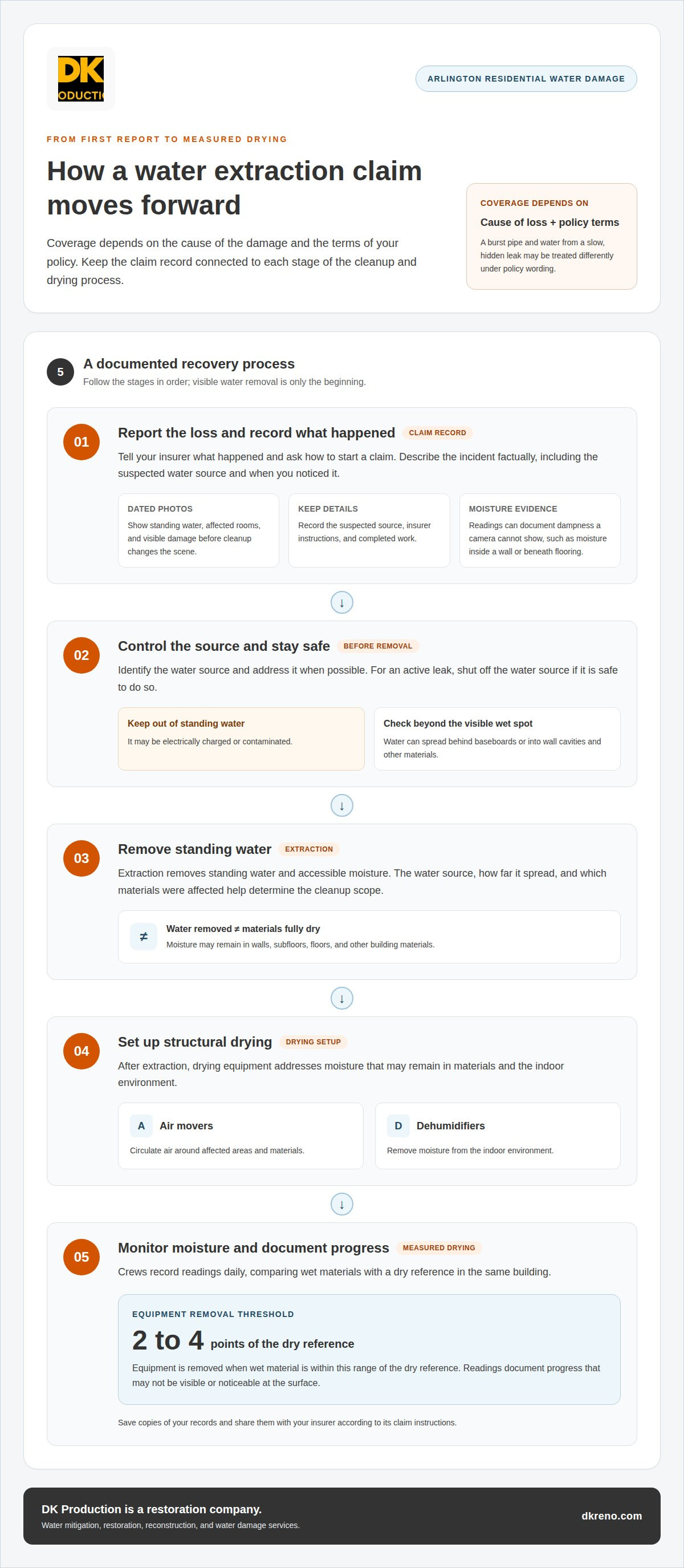
Insurance documentation should show both the damage and the steps taken to limit it. Dated photos can record standing water, affected rooms, and visible damage before cleanup changes the scene. Keep details about the suspected source, your insurer’s instructions, and completed work. Moisture readings can also document dampness a camera cannot capture, such as moisture in a wall or beneath flooring.
Extraction begins with identifying and addressing the water source when possible, followed by removing standing water and accessible moisture. That does not complete the drying process: water can remain hidden in walls, subfloors, and other materials. Structural drying follows extraction, using air movers to circulate air and dehumidifiers to remove moisture from the indoor environment.
Drying equipment stays in place while moisture levels are monitored. Crews record readings daily, comparing wet materials with a dry reference in the same building. Equipment is removed when wet material is within 2 to 4 points of that reference. This measured transition helps distinguish “the floor looks dry” from documented progress in materials that may not feel wet on the surface.
For an insurance claim, document extraction and structural drying as connected stages: source control, water removal, drying setup, and moisture monitoring. After a burst pipe, for example, photos can show the affected room while regular readings track drying in nearby materials. Save copies of your records and share them with your insurer according to its claim instructions.
How do you choose a licensed and insured water extraction company in Arlington? Look for a company that can provide evidence of its applicable license and current insurance, then review its written work scope and drying documentation process. Clear records, including dated photos and moisture readings, help you understand what was done and give your insurer information about the cleanup and drying stages.
Emergency and non-emergency water damage in Arlington?
Water damage is urgent when water is still entering, spreading across floors, or reaching electrical areas. Even a contained leak with no continuing flow needs assessment because moisture can remain in carpet, ceilings, and wall cavities.
For a home in Arlington, Washington, Texas requirements don’t apply. Cleanup and reconstruction are different types of work; permit requirements depend on the repair scope and local rules.
Emergency Water Removal
Emergency residential water removal focuses first on active water: identify the source, stop the flow when possible, and remove accessible standing water. A burst pipe beneath a sink, for example, can wet cabinets and flooring before water appears in the next room. The affected materials, contamination, and spread help determine cleanup steps. Water mitigation connects removal with the work needed to limit further damage.
Common causes include a burst pipe, leaking appliance, overflowing fixture, or water entering from outside. Each source creates a different pattern. A dishwasher leak may affect kitchen floors and cabinets, while water from an upper-level ceiling can reach rooms below. The visible wet area may not show the full extent: moisture can spread behind baseboards or into wall cavities.
Emergency status depends on whether the source remains active and whether water threatens more rooms or materials. If a leak has stopped and the affected area is contained, the job may be less time-sensitive than ongoing flooding. It still needs prompt attention: the Environmental Protection Agency advises drying wet materials within 24 to 48 hours to help prevent mold.
Emergency Service Availability and Response
A service described as available around the clock means residents can request help beyond ordinary business hours, but that does not establish a specific arrival time. Dispatch timing depends on the incident, access to the home, water volume, and affected areas. Clarify the initial steps: source assessment, standing-water removal, and a plan for drying and moisture monitoring.
Response time matters because water can keep spreading while a leak runs, but arrival alone doesn’t complete recovery. Water removed from carpet can leave moisture beneath it or in nearby wall cavities. An assessment should identify affected floors, ceilings, and materials, then establish the next steps for removal and drying.
For a non-emergency leak, note where moisture appears and whether it changes after the source is shut off. A ceiling stain, soft flooring, or damp carpet can signal water beyond the visible surface. These details help define the inspection area and distinguish a contained cleanup from damage that has spread through building materials.
Burst pipe, appliance, and flood cleanup
A burst pipe, leaking appliance, or flood can affect areas beyond the visible wet spot. Cleanup decisions depend on the water source, how far it spread, and which materials absorbed it. An Arlington residential water extraction assessment should consider these details before determining the cleanup scope.
Burst Pipe Cleanup
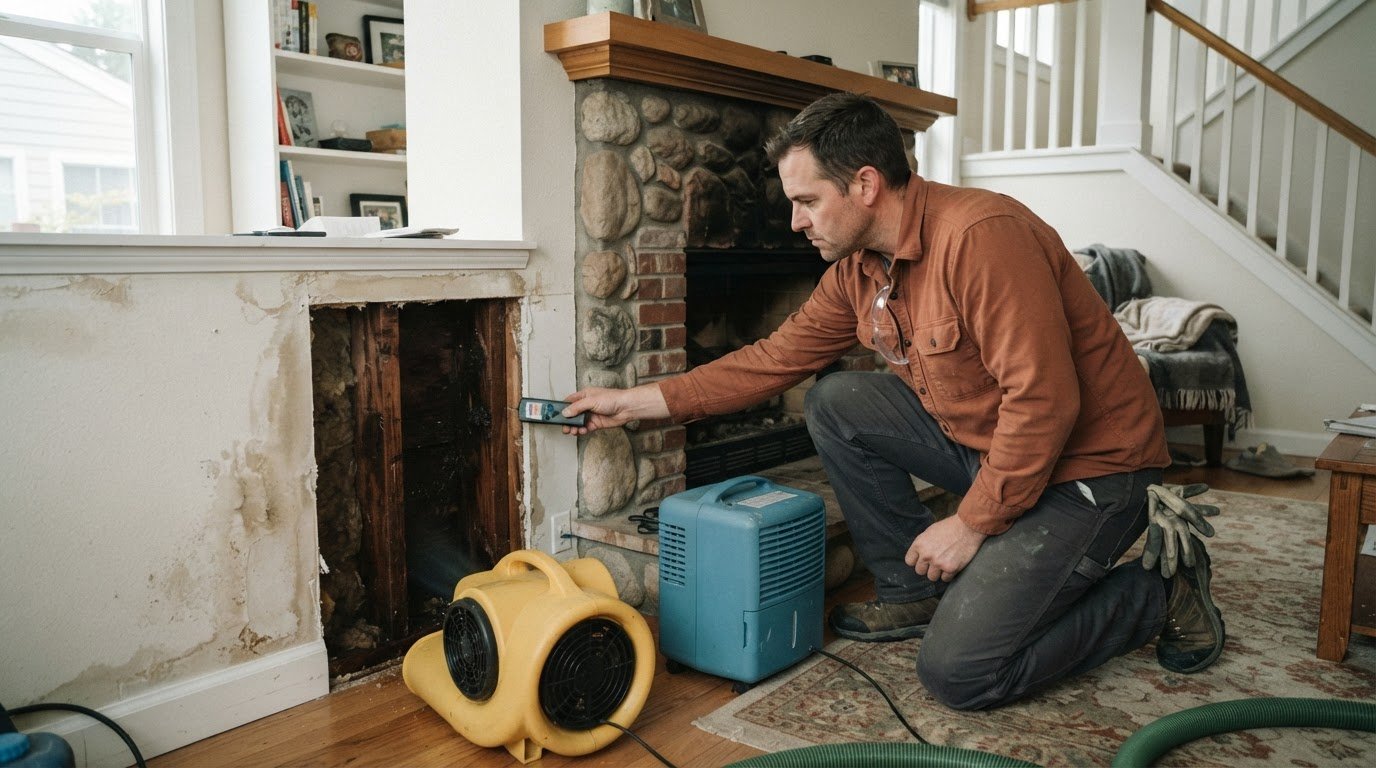
A burst pipe can release a substantial amount of water before anyone notices, leaving moisture beneath flooring or inside cabinets. Cleanup begins by addressing the source when possible, then assessing affected rooms and materials. A wet kitchen may need attention to cabinet bases, drywall, and the subfloor, not just the puddle beside the pipe.
Appliance leaks create different patterns. A refrigerator line may wet flooring behind the unit, while a washing machine overflow can spread into a hallway. The visible edge of wet carpet doesn’t show whether moisture has reached wall cavities or the subfloor. Arlington residential water extraction should account for nearby materials and spaces the water may have reached, not just the obvious wet patch.
Water Extraction and Cleanup Process
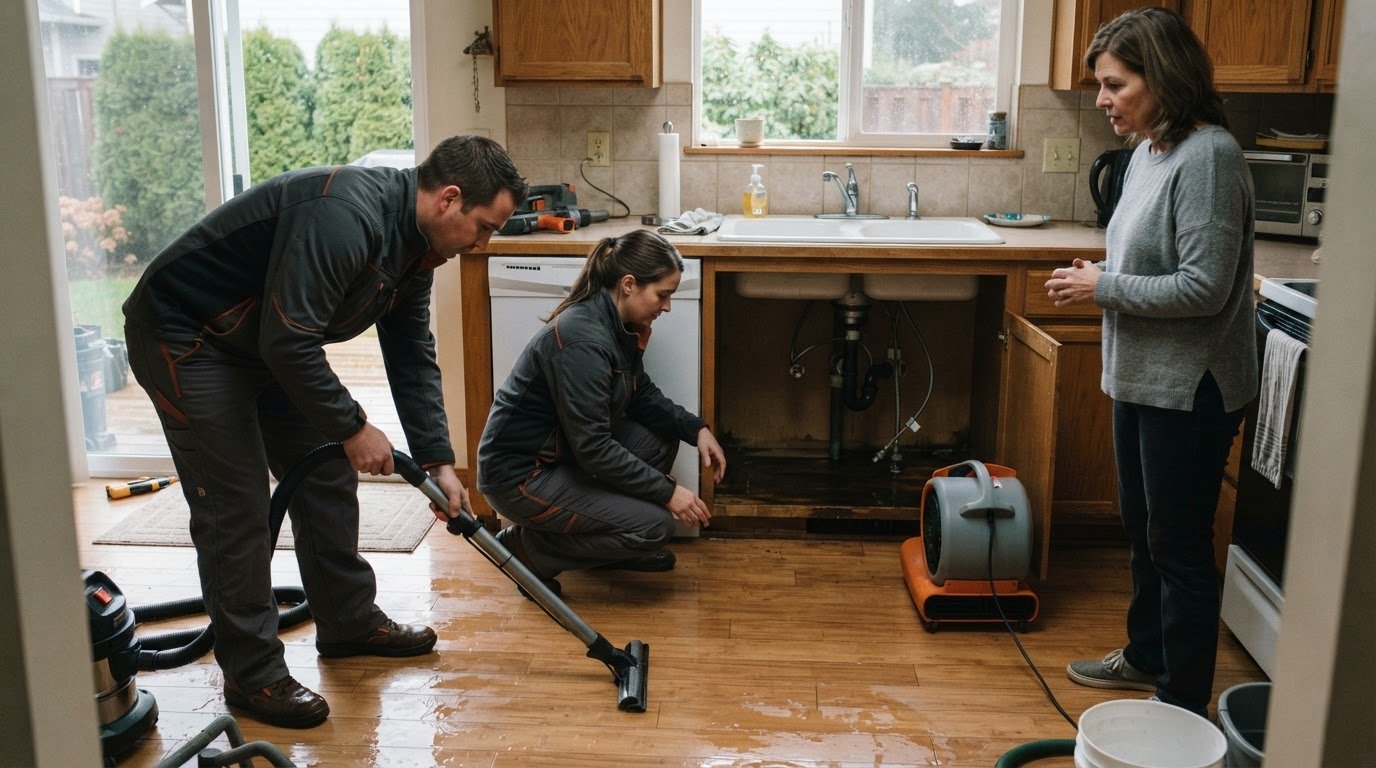
Extraction removes standing and absorbed water from a property. After locating the source, the cleanup team assesses how far the water spread and which building materials are affected before choosing equipment. A household wet vacuum may handle a small amount, while professional extraction equipment is designed for larger volumes. Fans alone don’t remove standing water.
Next, the team identifies which materials can be dried and which cannot be salvaged. Soaked carpet padding usually needs replacement, even when the carpet itself was extracted quickly. Carpet exposed to heavily contaminated water typically needs removal. Drywall or flooring may also need removal if its condition or contamination prevents effective restoration.
Water Categories and Cleanup Costs
Cleanup teams classify water as clean, grey, or black. The category describes contamination concerns and helps guide handling and material decisions. A supply-line leak differs from water involving an appliance or heavily contaminated flooding. The source and situation matter because water quality can affect what can be cleaned and what must be removed.
Cleanup pricing depends on the case and is provided after a quote request. Key factors include water volume, affected rooms, materials, accessibility, water category, and drying requirements. A contained appliance leak affecting one accessible floor presents a different scope from floodwater reaching several rooms, drywall, and subfloor cavities.
Flood cleanup can include removing debris and materials that cannot be salvaged, followed by drying and restoration. In Arlington, an assessment connects extraction needs to the affected structure, so a room-by-room inspection can identify damage beyond the obvious waterline. The scope, rather than the visible puddle alone, determines the required cleanup steps.
Steps to limit damage before technicians arrive
Start with safety, not cleanup. If water is near outlets or electrical equipment, avoid the area. Don’t walk through standing water, which may be electrically charged or contaminated. If you can safely reach the main shutoff, stop the water source and keep others away from wet rooms. Avoid moving appliances through water or touching submerged electrical items.
Next, avoid spreading moisture or disturbing the affected area. Don’t use household fans or space heaters before technicians assess it; uncontrolled drying can push moisture into wall cavities or beneath flooring. Leave wet materials accessible for inspection, and note where water appeared first. A ceiling stain above a damp floor, for example, can help trace the water’s path.
Delaying extraction can leave moisture in materials after the surface seems dry, increasing the chance of mold growth and damage to walls, floors, or other structural components. The Environmental Protection Agency advises drying wet materials within 24 to 48 hours to help prevent mold. Warm, damp air can also push a wall toward mold within a day or two, so don’t mistake a dry-looking surface for complete drying.
Look for signs beyond puddles. New ceiling discoloration, peeling paint, a musty odor, soft flooring, or damp-feeling carpet can point to hidden moisture. An unexplained increase in a household water bill may indicate a leak, even without visible water. When an emergency water issue appears, note the affected rooms and surfaces so the response can focus on likely wet areas.
Water source: Shut off the supply if it’s safe, then avoid the wet area if electrical hazards may be present.
Visible clues: Note stains, damp carpet, or changes to floors and ceilings.
Early response: Arrange professional assessment rather than relying on fans or heaters.
Prevention starts with knowing where the main water shutoff is and labeling it clearly. Regularly inspect beneath sinks, around toilets, and near appliances for dampness, corrosion, or small leaks. Look over supply lines and appliance connections for visible changes. Checking beneath a kitchen sink can reveal moisture before it reaches cabinets or adjoining flooring.
Structural drying requires more than making the surface feel dry. Technicians use moisture readings to assess affected materials and determine whether air movers and dehumidifiers are needed. Share the suspected source and any observed changes, such as a recurring ceiling mark or damp carpet. For water mitigation after a leak, arrange a water damage assessment.
DK Production Restoration
DK Production Restoration provides residential water damage restoration, water mitigation, and reconstruction to help homeowners recover after water affects their homes. Water mitigation includes burst-pipe cleanup, flood mitigation, sewage-backup extraction, structural drying, and mold prevention within hours. The right next step depends on the source, how far moisture has spread, and which materials need attention. Share details about the incident, affected rooms, and visible changes to help establish the work scope. Contact DK Production Restoration to discuss water damage restoration for your home.
Take the Next Step Toward Restoring Your Home
Once the immediate damage is under control, a clear plan can help move you from urgent decisions toward a livable home. Keep your insurer’s claim details, photos, and a brief timeline together to organize conversations about the property. Note any areas where damage or repairs remain, and share those concerns as restoration planning begins.
For Arlington residential water extraction, the next step is connecting the damage assessment to the work your home needs. DK Production provides water damage restoration, water mitigation, and reconstruction to address damage and the repairs that may follow. The right scope depends on the affected materials and the home’s condition. Contact DK Production to discuss the assessment and the path forward.
Contact DK Production Restoration to discuss your home’s water damage and restoration needs. With a practical plan in place, you can take the next step toward a comfortable home again.
Frequently Asked Questions
Why Hire a Professional for Water Extraction?
Professional extraction can reach water in places a household wet vacuum may not, such as beneath fixed cabinets or along flooring seams. A technician assesses the water source, affected materials, and room layout before choosing cleanup steps. This matters after a supply-line leak, when water may travel beneath finishes and into an adjoining room. DK Production Restoration provides Arlington residential water extraction and comprehensive recovery services throughout the local area.
Will you dry the home too, or just remove the water?
Water damage restoration can include drying, not just removing visible water. After extraction, air movers and dehumidifiers can help address moisture in affected building materials. The drying plan depends on what got wet and where moisture traveled. For example, a leak beneath a kitchen sink may affect the cabinet base and nearby flooring, so the inspection should consider more than the open floor area.
Can I dry the water myself with fans?
Household fans aren’t a substitute for professional drying and moisture assessment. Air moving across a wet surface can make it feel drier without showing whether moisture remains at floor edges, beneath trim, or in nearby materials. If a small spill is isolated, keep people away from the wet area and note where it occurred. If water has spread or entered building materials, arrange an assessment.
Can extraction save my carpet?
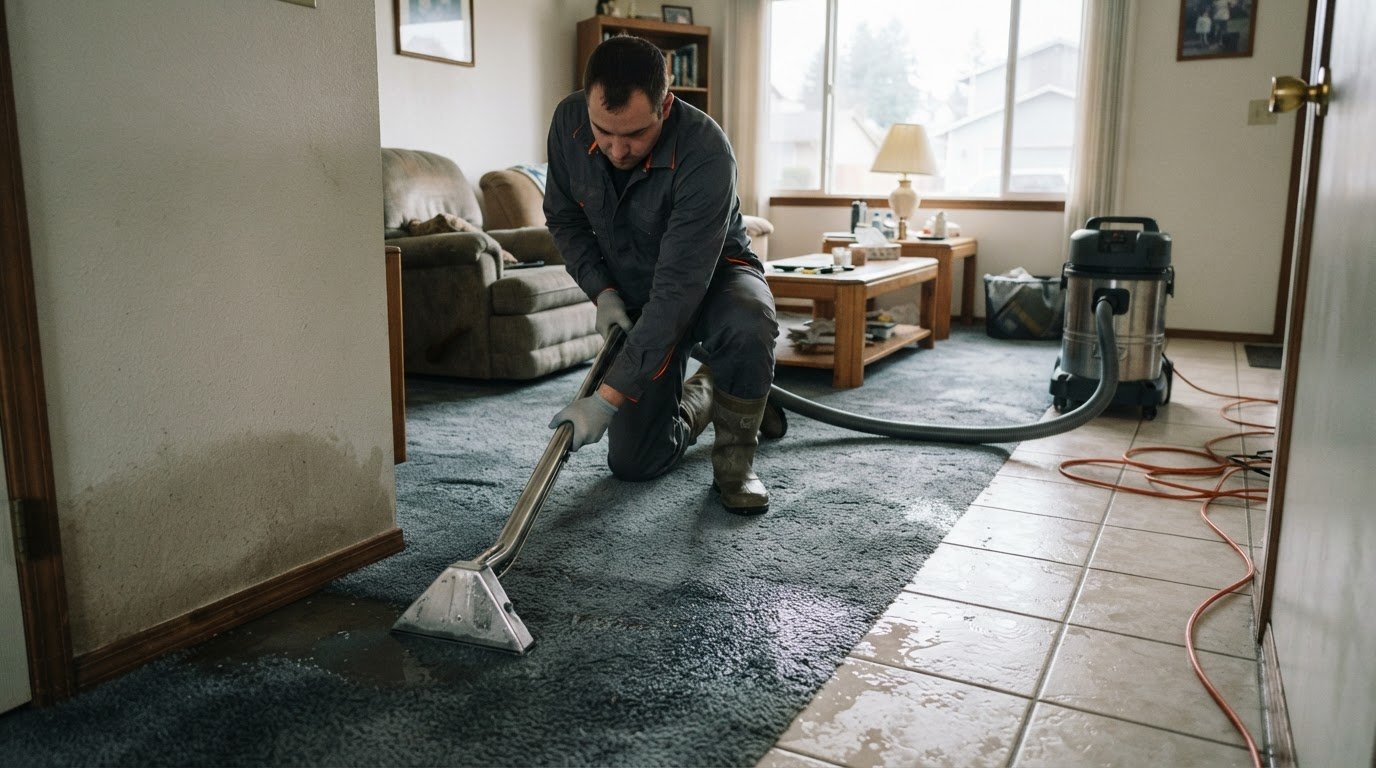
Carpet may be salvageable when extraction begins within 24 to 48 hours after clean-water damage. The carpet’s condition and the type of water also matter. Padding is a separate concern: soaked carpet padding usually needs replacement, even when the carpet is extracted quickly. For example, a clean-water leak affecting a carpeted room calls for assessing both carpet and padding, rather than assuming they can both remain.
Can you work with my insurance company for an Arlington claim?
Yes. DK Production Restoration bills the insurance company directly for water damage work. Keep your claim information and insurer communications together, then share relevant details about the incident and affected rooms. This can help connect property damage work with the claim process. Coverage still depends on your policy and the cause of the loss, so direct billing doesn’t mean a particular expense is covered.
Do I need extraction if the floor looks almost dry?
Possibly. A floor’s surface can look dry while water remains along the edges, beneath a threshold, or in materials beside the wet area. A damp patch near a doorway, for example, may extend beneath the flooring into the next room. An assessment can identify whether moisture remains and whether extraction or additional drying is appropriate. Don’t rely on appearance alone after water has spread beyond one small spot.
Comments