
Insurance Restoration Companies: How to Choose a Partner for Property Recovery in 2026

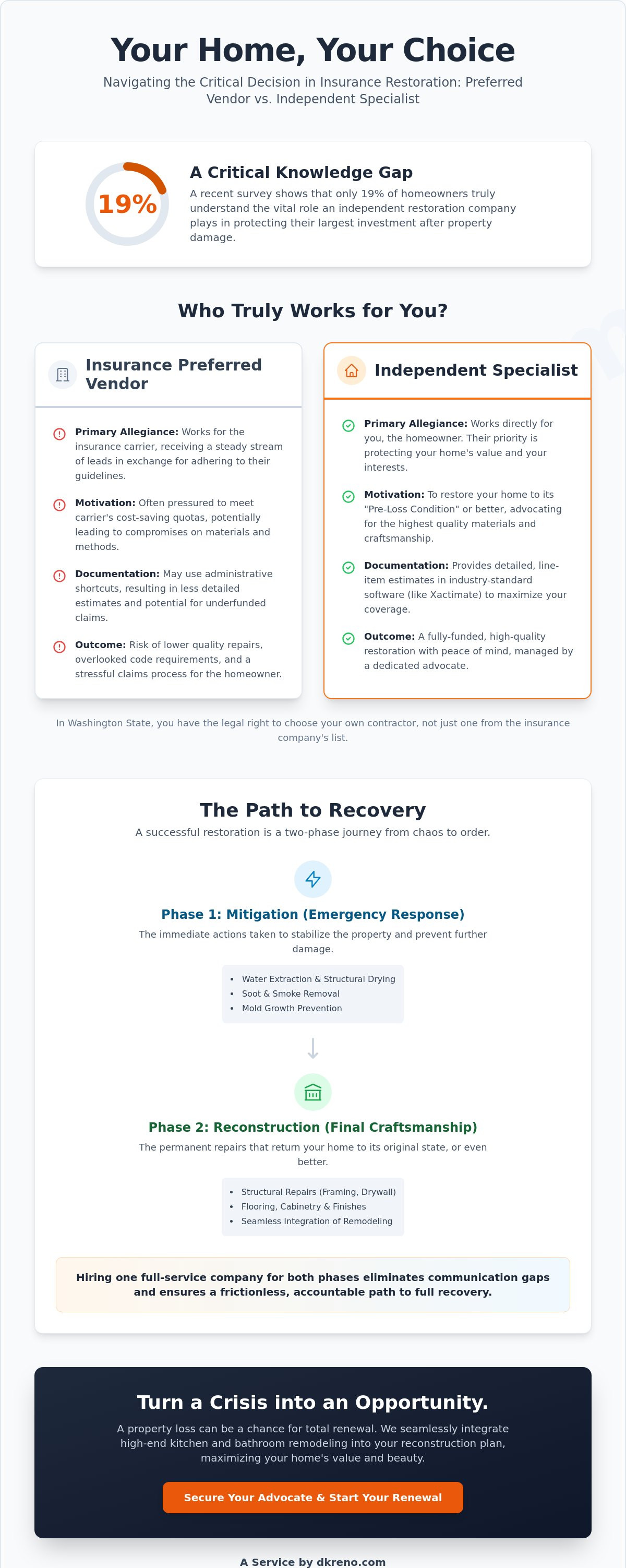
What if the "preferred vendor" your insurance carrier suggests is more focused on their bottom line than your home's long-term health? When you're facing property damage, it's easy to feel trapped between confusing claims terminology and the stress of managing multiple contractors. Most homeowners instinctively call their insurance company first, but a 2026 survey shows that only 19% of adults truly understand the vital role that independent insurance restoration companies play in protecting their largest investment. You deserve a partner who assumes the burden of the crisis on your behalf, acting as a disciplined advocate from the first moment of mitigation to the final day of reconstruction.
We understand that your primary goal is a return to normalcy without the friction of administrative delays or low-quality repairs. This article provides a clear framework for comparing contractors so you can secure a single point of contact for both the initial mess and the high-quality finish. You'll learn how to manage 2026's stricter EPA lead-paint standards and updated building codes to ensure your home is fully restored, or even enhanced through kitchen and bathroom remodeling. We'll walk through the essential steps to maximize your coverage and turn a period of chaos into a methodical journey toward a renewed, safe, and beautiful home.
Key Takeaways
Distinguish between emergency mitigation and structural reconstruction to ensure your property recovery is managed with a comprehensive, long-term perspective.
Understand the strategic advantages of hiring independent insurance restoration companies that prioritize your home's value and material quality over the insurance carrier's bottom line.
Learn how to navigate the "Proof of Loss" requirements through detailed documentation that protects your claim and helps secure the coverage you deserve.
Identify local vetting criteria to find a partner who acts as both a master craftsman and an administrative advocate, assuming the burden of adjuster negotiations on your behalf.
Discover how to transform a property loss into an opportunity for total renewal by seamlessly integrating professional remodeling into your final reconstruction plan.
Table of Contents
What Are Insurance Restoration Companies and Why Do They Matter?
Property damage is a chaotic experience that leaves homeowners feeling vulnerable and overwhelmed. Professional insurance restoration companies act as a stabilizing force during this crisis. These specialized firms bridge the gap between emergency response and final craftsmanship. While a standard contractor builds from a clean slate, a restoration partner must first stabilize a disaster site and then navigate the complex administrative requirements of an insurance claim. They assume the burden of the project's technical and logistical weight so you can focus on your family's recovery.
The Difference Between Mitigation and Reconstruction
Effective recovery involves a two-phase journey. First, water mitigation focuses on immediate emergency response. This includes water extraction, structural drying, and preventing secondary issues like mold growth. Once the property is stable, the focus shifts to reconstruction. This involves the permanent repair of structural elements, flooring, and walls. To understand the full scope of what disaster restoration entails, it's helpful to see it as a transition from chaos to order. Hiring one company for both phases ensures a frictionless path to normalcy. It eliminates the risk of communication gaps between different vendors during a high-stress period.
Restoration vs. General Contracting
You might wonder why a standard remodeler isn't the right fit for an insurance claim. The primary difference lies in documentation and estimation standards. Most insurance adjusters require estimates written in Xactimate, a specialized software that uses standardized regional pricing. A general contractor often provides simple quotes. These lack the line-item detail adjusters demand. This gap can lead to significant delays or underfunded claims.
Specialists in this field focus on the "Pre-Loss Condition" standard. This means their goal is to return your home to exactly how it was before the damage occurred, or even better. They protect your property's long-term value by ensuring every repair meets rigorous safety and performance standards. Consider these key differentiators:
Administrative Advocacy: Restoration firms speak the language of adjusters and provide the documentation required for maximum coverage.
Technical Expertise: They handle complex issues like soot removal and structural drying that standard remodelers aren't equipped for.
Accountability: A full-service firm manages the entire duration of the project, from the initial "mess" to the final high-quality finish.
Comparing Restoration Models: Preferred Vendors vs. Independent Specialists
Choosing between a preferred vendor and an independent specialist is one of the most critical decisions you'll make after a property loss. Your insurance carrier will likely suggest a specific list of names. It feels like a helpful gesture during a crisis. But you must ask yourself one question: who does the contractor actually work for? Understanding the underlying business models will help you protect your home's value and your family's peace of mind.
Preferred vendors operate within "Direct Referral Programs." They agree to pre-negotiated rates and administrative shortcuts in exchange for a steady stream of leads from the insurance carrier. While this might lead to a faster start, it often creates a conflict of interest. The contractor may feel pressured to meet the carrier's cost-saving quotas rather than advocating for the most thorough repair. In Washington State, you aren't required to use the carrier's list. Local law protects your right to hire the professional you trust most. This is especially vital as the 2024 Washington State Building Codes become mandatory on November 1, 2026, requiring specific structural standards that a budget-focused vendor might overlook.
The Pros and Cons of Insurance-Mandated Programs
The primary benefit of a mandated program is administrative ease. You get direct billing and a perceived "guarantee" from the carrier. However, the reality of pre-negotiated rates often means less room for high-end materials. If a contractor is focused on volume, they might miss the small details that preserve your home's long-term health. Corner-cutting becomes a risk when a contractor's primary loyalty lies with the insurance company providing their next job.
The Independent Specialist Advantage
Independent insurance restoration companies offer a different level of advocacy. Because they work directly for you, they push for the best possible materials and a deeper level of structural integrity. They aren't afraid to challenge an adjuster's initial estimate if it doesn't cover what's necessary for a full recovery. They act as your project manager and protector throughout the entire duration of the rebuild.
This partnership also provides a unique remodeling opportunity. Instead of just replacing what was lost, you can work with a specialist to improve your home's layout or functionality. You get personalized service and direct accountability to your family, not a national corporate office. If you're looking for a partner who prioritizes your vision, explore how a dedicated specialist manages your recovery. They assume the burden of the crisis so you can focus on returning to a high-quality finished state.
The Insurance Restoration Process: From Chaos to Order
The journey from property loss to a finished home requires a disciplined, four-step methodology. It begins with emergency stabilization, often called the "Stop the Bleeding" phase. This involves immediate, decisive actions like water mitigation to dry structural cavities or boarding up openings to protect the interior from the elements. Once the site is secure, the focus shifts to detailed documentation. This is where the "Proof of Loss" requirements are met. Your partner meticulously records every damaged item and structural failure to ensure your claim reflects the true extent of the loss. This early, rigorous attention to detail prevents administrative friction later in the project.
The third phase involves the critical negotiation between your contractor and the insurance adjuster. Professional insurance restoration companies act as your administrative advocate during these meetings. They use their technical knowledge to justify the necessary repairs so you don't have to navigate complex policy language alone. Finally, the transition from a construction site back to a high-quality home begins. This reconstruction phase is where the "mess" is replaced by the high-quality finish you expect. It's a period of total renewal where your property regains its beauty and structural integrity.
Navigating the Claims Adjuster Relationship
Proving the full extent of a loss requires more than just a simple visual walkthrough. Specialists use advanced tools like thermal imaging and moisture mapping to identify water trapped behind walls or under flooring. This objective data is essential because adjusters often overlook "hidden" damage that can lead to structural rot or mold months after the claim is closed. Clear, line-item transparency is a hallmark of a professional home restoration guide. It ensures that both the carrier and the homeowner agree on the technical requirements before the first hammer swings.
Managing Timelines and Expectations
Restoration projects often follow a different rhythm than standard remodeling. Administrative approvals from insurance carriers can introduce delays that feel frustrating when you're eager to return to your home. It's also common for "supplemental" claims to arise when new damage is discovered during the teardown process. A dedicated project manager is vital in high-demand areas like Seattle and Kirkland. They keep the process moving by coordinating with adjusters, engineers, and local inspectors. Their goal is to maintain a consistent, logical pace that moves you from chaos to order as quickly as possible while assuming the burden of the crisis on your behalf.
How to Vet Insurance Restoration Companies in the Puget Sound
Selecting the right partner requires a methodical approach that goes beyond a simple web search. In the Puget Sound, top-tier insurance restoration companies must demonstrate technical proficiency through IICRC certifications, specifically the ANSI/IICRC S500 for water damage and the S700 for fire and smoke restoration. They should also be fully registered in accordance with Washington's SHB 1534 Homeowner Recovery Program. This program provides a vital safety net for homeowners by ensuring they work with registered contractors who meet state standards. Verify that your potential partner handles both the initial water mitigation and the final reconstruction. This dual capability prevents the fragmented communication that often stalls property recovery during the transition from a "mess" to a finished home.
Ask to see a portfolio of high-value residential projects. This ensures they have the craftsmanship required for a high-quality finished state rather than just basic structural repairs. A professional firm will be deeply familiar with Xactimate software, which is the industry standard for major insurance carriers. This expertise allows them to act as a protective specialist during negotiations. Finally, look for reviews that emphasize empathy and clear communication. During a crisis, you need a partner who assumes the burden of the project's logistics and treats your home with the respect it deserves.
Local Expertise: Why Arlington and Shoreline Context Matters
Local context is vital because of the specific regulatory environment in our region. For instance, the 2024 Washington State Building Codes become mandatory on November 1, 2026. A contractor based in Arlington or Shoreline will understand how these updates affect your rebuild requirements and permit timelines. Our damp climate also demands a rigorous approach to mold prevention during the drying phase. Understanding the water damage restoration cost in Arlington helps you set realistic expectations for your claim documentation. Ensure your partner is also compliant with the EPA's January 12, 2026, lead-dust standards, which require specialized laboratory testing and lower clearance levels for older homes.
Red Flags to Avoid During a Crisis
Protect yourself from "storm chasers" who arrive after a major weather event. These out-of-state firms often disappear once the insurance check is signed, leaving you with no recourse for warranty issues or structural failures. Be wary of low-ball estimates that ignore the complexities of structural reconstruction. A common tactic involves pressuring homeowners to sign a "Direction to Pay" form before the full scope of work is explained. A reliable mentor will provide a transparent, line-item estimate before asking for a commitment. If you need a partner who prioritizes your home's long-term health and structural integrity, schedule a professional consultation with our restoration experts.
From Restoration to Renewal: The DK Production Standard
Many homeowners view property damage as a setback to be endured, but we see it as a pivotal moment for total renewal. While some insurance restoration companies focus solely on returning a space to its previous state, our approach elevates your home's functionality and aesthetic appeal. We believe that a restoration project should result in a property that is safer, more resilient, and more beautiful than it was before the loss. This philosophy is rooted in a supportive partnership where we act as your protective specialist, assuming the technical and administrative burdens so you can focus on your family's well-being.
Our "Advocacy First" model means we don't just perform the work; we manage the complex dialogue with your insurance adjuster. We provide the rigorous documentation and Xactimate estimates required to ensure your claim reflects the true cost of a high-quality finish. By serving as a single point of contact for water mitigation, reconstruction, and design, we eliminate the stress of managing multiple vendors during a crisis. We assume the burden of the "mess" so you can enjoy the peace of mind that comes from a professional, methodical rebuild.
Beyond 'Back to Normal'
The demolition phase of a restoration project often creates a unique "blank slate" that would otherwise require a significant investment to achieve. We help you capitalize on this transition by integrating premium kitchen remodeling or bathroom remodeling into the reconstruction workflow. Whether it's updating a layout for better flow or selecting high-performance materials that exceed standard policy allowances, we treat this as a form of architectural renewal. DK Production transforms the chaos of a property loss into a high-quality finished state that enhances your home's long-term value.
Your Partner in Recovery
A successful recovery depends on a logical, methodical flow from the initial emergency to the final walkthrough. Our disciplined standards of performance ensure a frictionless experience where every detail is handled with quiet confidence. We are deeply committed to the Puget Sound region, providing expert care to homeowners in Arlington, Seattle, and the surrounding communities. By maintaining a high level of accountability throughout the entire duration of the project, we act as a reliable mentor for those navigating the aftermath of a disaster. If you're ready to move from crisis to a state of order and renewal, contact us today for a stabilizing consultation on your property recovery.
Take the First Step Toward Your Home's Renewal
Property recovery is more than just drying out walls; it's a methodical journey from chaos back to a high-quality finished state. Choosing between various insurance restoration companies requires finding a partner who acts as your administrative advocate, using specialized expertise in Xactimate to ensure your claim is fully documented and fairly negotiated. By selecting an independent specialist rather than a carrier-mandated vendor, you gain the freedom to transform a structural loss into a genuine opportunity for premium remodeling. This comprehensive approach ensures that your home is not just repaired, but truly renewed.
Since 2014, DK Production has served the Puget Sound region with a disciplined focus on both emergency mitigation and high-value reconstruction. We assume the technical and administrative burdens of the crisis so you can focus on your family's well-being. Let DK Production assume the burden of your property loss, contact our restoration specialists today. You can move forward with the quiet confidence that your home is in the hands of professionals committed to your total satisfaction and a frictionless return to normalcy.
Frequently Asked Questions
Can I choose my own insurance restoration company or do I have to use the one my insurance suggests?
You have the legal right to choose your own contractor; you aren't required to use the insurance carrier's "preferred vendor." Washington State law protects a homeowner's right to hire the professional they trust most for their property recovery. Selecting independent insurance restoration companies allows you to prioritize quality and material standards that align with your long-term vision rather than the carrier's cost-saving quotas.
What is the difference between a mitigation company and a reconstruction company?
Mitigation focuses on immediate emergency stabilization to stop further damage, such as water extraction or structural drying. In contrast, reconstruction involves the permanent repair of structural elements, flooring, and finishes to return your home to its pre-loss condition. Choosing a full-service partner who handles both phases ensures a frictionless transition from the initial "mess" to the final high-quality rebuild.
How long does the typical insurance restoration project take in the Seattle area?
Timelines for restoration vary significantly based on the severity of the damage and the speed of insurance carrier approvals. While emergency mitigation might take a few days, the full reconstruction phase often spans several weeks or months due to permit requirements and material lead times. A dedicated project manager will provide a methodical schedule to keep the process moving toward a state of order and renewal as quickly as possible.
Will my insurance cover the cost of upgrading my kitchen during the restoration?
Insurance policies typically cover "like-for-like" replacement to return your space to its pre-loss state. However, the reconstruction phase is an ideal opportunity to integrate kitchen remodeling by paying the difference between the insurance allowance and your desired upgrades. This allows you to utilize the "blank slate" of a gutted room to improve your home's layout and long-term value while the site is already active.
What should I do in the first hour after discovering water or fire damage?
Prioritize safety by evacuating the area and turning off utilities like water or electricity if it's safe to do so. Once the immediate threat is contained, take detailed photos and videos of the damage to support your future claim documentation. Contacting professional insurance restoration companies early allows them to initiate emergency mitigation and act as a stabilizing force during the most stressful moments of the crisis.
What is Xactimate, and why does my restoration contractor need to use it?
Xactimate is the industry-standard estimating software used by major insurance carriers to determine standardized regional pricing for repairs. Your contractor needs this tool to speak the same language as the adjuster and provide the line-item transparency required for maximum coverage. This expertise ensures that the proposed scope of work is technically accurate and meets the administrative requirements of your insurance policy.
Does insurance cover mold remediation as part of a water damage claim?
Mold remediation is often covered if the growth resulted from a sudden, accidental water loss that was reported promptly. However, many policies include specific sub-limits for mold, so it's vital to review your individual coverage details with your agent. Specialists use moisture mapping to identify hidden dampness early, which is the most effective way to prevent mold issues from developing during the restoration process.
How do I know if a restoration contractor is properly licensed in Washington State?
You can verify a contractor's status through the Washington State Department of Labor & Industries (L&I) website. As of 2026, ensure they comply with SHB 1534, which manages the Homeowner Recovery Program to protect you from losses caused by registered contractors. A reputable firm will also hold specialized IICRC certifications, demonstrating their commitment to the highest standards of performance in property recovery.


Comments