
Home Reconstruction After Water Damage: The Complete 2026 Recovery Guide

Updated: Jul 17
Imagine walking into your hallway to find the drywall stripped away, the flooring gone, and a series of industrial fans humming where your life used to happen. It's a heavy, unsettling sight that leaves most homeowners feeling like they're living in a shell of a building rather than a sanctuary. You likely feel the weight of every missing piece, worrying if your insurance will cover the true cost or if the final result will look like a disjointed patch job. We understand that the path to home reconstruction after water damage feels like a mountain of paperwork and technical hurdles, but this transition is actually your first step toward total property renewal.
We agree that the gutted state of your home is overwhelming, yet this moment of chaos is the perfect foundation for a stronger, more beautiful structure. This guide provides the professional expertise you need to navigate the complex journey from mitigation to a fully restored, high-value home. You'll discover how to manage insurance adjusters with confidence, adhere to the latest 2026 building codes, and turn a disaster into a seamless remodeling opportunity that leaves your house better than it was before the damage occurred.
Table of Contents
The Transition from Water Mitigation to Home Reconstruction
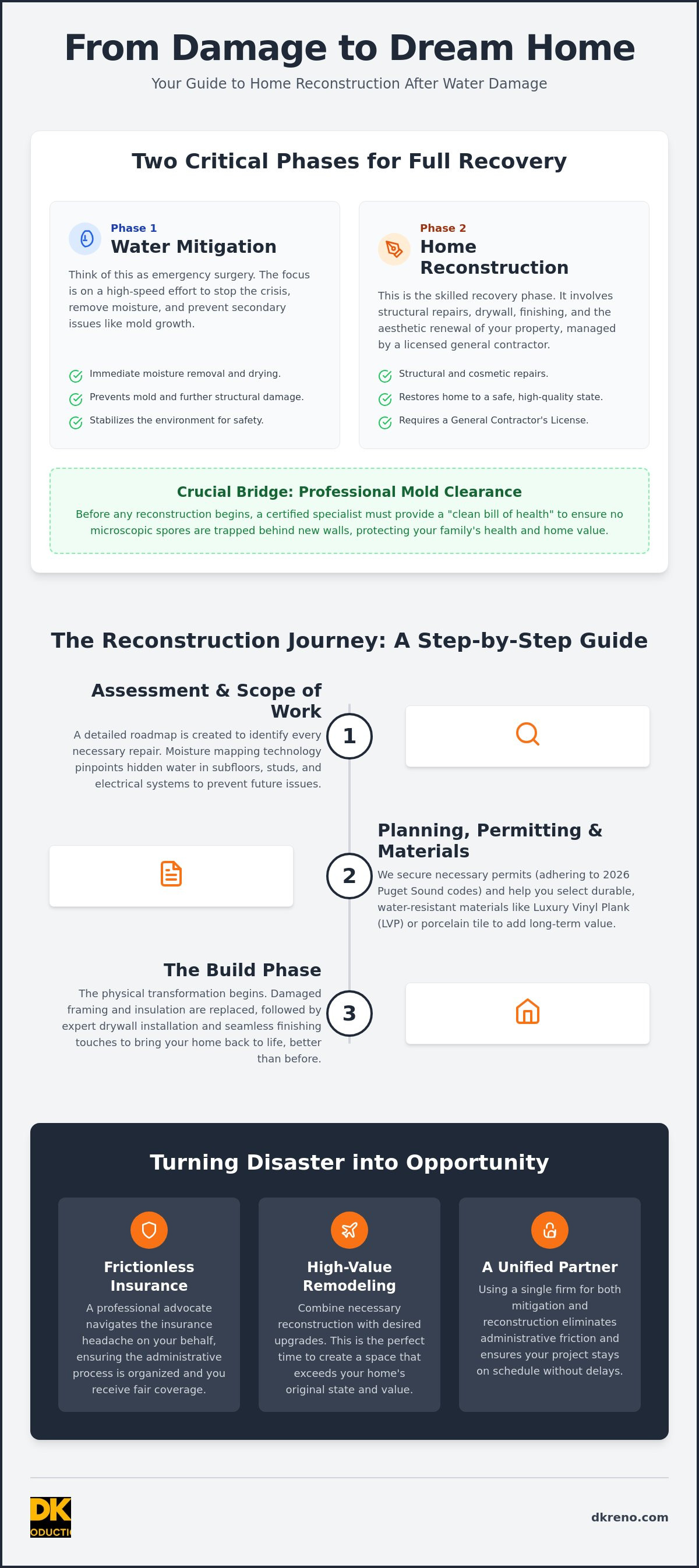
The silence that follows the removal of industrial fans can be more unsettling than the noise itself. You're left standing in a home that feels like a skeleton; it has exposed studs and missing floors. This is the "Now What" phase. The focus shifts from stopping a crisis to rebuilding your life. Moving into home reconstruction after water damage is a methodical process. It requires a different set of skills and professional licensing than the initial cleanup. While the mitigation team worked to stabilize the environment, the reconstruction phase focuses on the structural and aesthetic renewal of your property.
Before the first nail is driven, you must have a professional mold specialist provide a "clean bill of health." This ensures no microscopic spores are trapped behind your new walls. It protects your family's health and the home's future value. By understanding the basics of water damage, you'll better appreciate why these distinct phases must happen in a specific, disciplined order. Skipping the verification of structural dryness often leads to costly repairs later on.
Understanding Mitigation vs. Reconstruction
Think of mitigation as emergency surgery and reconstruction as the recovery that follows. Mitigation is a high-speed effort to remove moisture and prevent secondary issues like mold. Reconstruction is a skilled trade involving structural repairs, drywall installation, and precision finishing. This phase requires a general contractor's license, which is distinct from the certifications often held by cleanup crews. Hiring a single firm to manage both phases eliminates the administrative friction that occurs when a drying crew hands off a project to a separate contractor. This unified approach keeps your timeline moving. It ensures the people rebuilding your home have a deep understanding of exactly how it was damaged and dried.
Assessing the Structural Scope of Work
Water is deceptive. It often hides in subfloors, wall studs, and electrical systems long after the surface feels dry. A detailed "Scope of Work" acts as your roadmap. It identifies every necessary repair from the foundation up. We use moisture mapping to verify that every inch of the structure is ready for home reconstruction after water damage. This step is critical because sealing moisture inside a wall is a recipe for future disaster. By performing a rigorous assessment of the hidden damage, we ensure your home is not just repaired, but restored to a state of safety and high quality that will last for decades.
A Step-by-Step Guide to the Home Reconstruction Process
Moving from the "shell" state back to a finished home is a journey that requires a disciplined timeline. In 2026, the home reconstruction after water damage process follows a logical progression that replaces chaos with predictable order. It begins with a comprehensive assessment that dictates every move for the next several weeks. You aren't just putting things back; you're ensuring the bones of the building are healthier than they were before the saturation occurred. This methodical approach acts as a stabilizing force, allowing you to focus on your family while we manage the technical complexities of the rebuild.
Planning, Permitting, and Material Selection
The Planning Phase is the foundation of a frictionless recovery. During this stage, we secure the necessary permits for cities like Everett, Kirkland, or Bothell. Local codes in the Puget Sound area are strict, especially regarding the 2026 electrical and energy standards. Choosing the right materials now prevents future headaches and adds long-term value to your property. We often recommend Luxury Vinyl Plank (LVP) or porcelain tile because they offer superior water resistance compared to traditional materials. For a science-based perspective on recovery steps, you can consult University of Missouri Extension flood resources, which highlight how critical early planning is to a successful outcome.
The Build Phase: From Framing to Finishes
Once the permits are in hand, the physical transformation begins. We start by replacing any framing members or insulation that lost structural integrity during the saturation. This disciplined approach to home reconstruction after water damage ensures that every layer of your home is safe and durable. Next comes the drywall. Our teams specialize in seamless texture matching so your walls look unified rather than like a series of patches. The "Final Polish" involves the installation of cabinetry, fixtures, and hardware. This is where your space regains its personality and becomes a home again. If you're ready to start this transformation, our team at DK Production can help you visualize the final result.
The process concludes with a rigorous final walkthrough and quality assurance check. We don't just look for aesthetic perfection; we test every fixture and inspect every seam to ensure it meets our performance standards. This high level of accountability provides the peace of mind you deserve after a crisis. By the time we hand back the keys, the transition from chaos to order is complete, leaving you with a home that is stronger and more beautiful than before.
Navigating Insurance Claims and Administrative Support
Dealing with an insurance carrier while your home is in pieces feels like a second job you never wanted. The paperwork is dense, the timelines are rigid, and the terminology is often confusing. During home reconstruction after water damage, your contractor should act as your primary advocate. We assume the burden of these technical negotiations to ensure the carrier understands the full scope of the loss. By acting as a project manager and advocate, we bridge the gap between the initial damage and the final payout, protecting you from the friction of administrative hurdles.
The insurance company operates under the principle of "Pre-Loss Condition." This means they're obligated to return your home to the state it was in before the water hit. However, proving what that state looked like requires meticulous documentation. We use high-resolution photos, moisture logs from the mitigation phase, and detailed line-item estimates to build an undeniable case for your recovery. This level of detail prevents the "patch job" fear many homeowners have, ensuring your home is restored with the high-quality finishes it deserves.
Working with Claims Adjusters and Documentation
Preparation is the key to a successful adjuster meeting. We walk the property with the adjuster to point out subtle issues they might miss, such as compromised subfloors or underlying electrical risks. To speak their language, we utilize Xactimate, which is the same industry-standard software used by most major carriers. This aligns our costs with their standards from day one. If your home featured high-end materials, we fight to honor the "Like Kind and Quality" clause, ensuring your custom hardwoods or designer fixtures aren't replaced with inferior alternatives.
Managing Scope Alignment and Supplements
It's common for hidden damage to appear once the rebuild starts. Perhaps a stud is more warped than initially thought, or a wiring issue becomes apparent behind a removed wall. When this happens, we initiate the supplement process. This is a formal request for additional funds from the insurance carrier to cover these necessary repairs. We manage this entire loop, keeping you informed without requiring you to lead the negotiation. This transparent communication ensures that the home reconstruction after water damage remains fully funded and technically sound from framing to the final walkthrough.
Turning Disaster into Design: Reconstruction vs. Remodeling
Opening the walls allows you to address long-standing functional issues that previously felt too daunting to fix. We can reconfigure electrical outlets for better kitchen workflow or add energy-efficient insulation that lowers your utility bills for years to come. This approach maximizes your return on investment. A home that has been professionally renewed with modern finishes often sees a higher property value than one that was merely "patched" to meet the bare minimum requirements of an insurance claim. It's about turning a moment of chaos into a strategic investment in your property's future.
Upgrading Your Space During the Rebuild
Bathrooms and kitchens are the most common areas where disaster meets design. Instead of replacing a damaged stall with basic materials, you can transition into a waterproof luxury shower that provides long-term peace of mind and elegance. In the kitchen, we can modernize layouts to improve the flow of your daily life. Integrating smart home technology or high-value cabinetry during the structural repair phase ensures these features are built into the very fabric of the house. If you're ready to explore these possibilities, our design team can help you plan your home's total renewal today.
Reconstruction as a Form of Total Renewal
There's a significant psychological benefit to returning to a space that feels better than it did before the crisis. When home reconstruction after water damage focuses on total renewal, it erases the trauma of the disaster and replaces it with a sense of excitement. Our experience with home remodeling in Seattle allows us to integrate custom design elements directly into your restoration timeline. This disciplined coordination ensures that your upgrades don't cause unnecessary delays, allowing you to step back into a sanctuary that finally reflects your current lifestyle and aesthetic preferences.
Choosing a Specialized Reconstruction Contractor in the Puget Sound
Selecting the right partner for home reconstruction after water damage is the most consequential decision you'll make during your recovery. In the Puget Sound region, local expertise isn't just a convenience; it's a requirement for navigating the specific permitting timelines in cities like Arlington, Shoreline, and Everett. A contractor who understands the local building officials and the 2026 code requirements can prevent the bureaucratic delays that often stall national franchises. We provide a stabilizing presence by managing these local nuances on your behalf, ensuring your project moves from chaos to order without unnecessary friction.
When you review a contractor's past work, look for high standards in both technical restoration and high-end remodeling. The ability to structurally repair a home is one skill, but the ability to deliver a "better-than-before" finish requires a different level of craftsmanship. You want a partner who treats your rebuild with the same care as a custom home addition or a whole-house renovation. This disciplined focus on quality ensures that your property's value is protected and that the final result feels like a cohesive part of your home's story rather than a visible repair. Our team assumes the burden of the technical details so that you can focus on your family's return to normalcy.
Why Full-Service Restoration Matters
Restoring Peace of Mind with DK Production
We don't just see ourselves as builders; we act as your mentor and protector throughout the insurance restoration process. Our team assumes the burden of the crisis so you don't have to manage the administrative headache alone. We're deeply committed to providing a frictionless journey for homeowners in the Puget Sound, offering the quiet confidence that comes from years of specialized experience. If you're ready to begin your journey toward total renewal, contact our team today for an expert assessment of your home reconstruction after water damage needs.
Reclaiming Your Home’s Future with Confidence
The journey from a water-damaged house to a fully restored sanctuary is complex, but you don't have to walk it alone. We've explored how the transition from stabilization to structural renewal is the foundation of a successful recovery. By leveraging professional administrative support and local expertise in the Puget Sound, you can turn a moment of chaos into a strategic opportunity for property improvement. Home reconstruction after water damage is your chance to ensure your home meets the latest 2026 safety standards while potentially modernizing your space for a result that exceeds its original state.
Our team is ready to assume the burden of your crisis by providing expert insurance negotiation support and full-service mitigation and reconstruction. We proudly serve families in Arlington, Seattle, and throughout the Greater Puget Sound with a commitment to a frictionless experience. You deserve a home that feels like a sanctuary again, and we have the quiet confidence to lead you through every step of that renewal. Start Your Path to Recovery with DK Production Today and take the first step toward a home that is stronger and more beautiful than ever before.
Frequently Asked Questions
How long does home reconstruction typically take after water damage?
The duration of home reconstruction after water damage typically ranges from several weeks to a few months, depending on the severity of the saturation and the complexity of the finishes. While the initial drying takes only a few days, the structural rebuild requires time for material lead times and local inspections. We provide a detailed timeline at the start of the project to act as a stabilizing force for your planning and expectations.
Will my insurance cover the cost of upgrading my kitchen during reconstruction?
Insurance carriers are only obligated to pay for your property's pre-loss condition, meaning they won't cover the full cost of a luxury upgrade. However, you can leverage the funds they provide for standard repairs to offset the total cost of a modern remodel. You simply pay the difference between the basic replacement and your chosen premium materials, allowing you to gain a high-value kitchen at a lower out-of-pocket cost.
Do I need to hire a separate company for water drying and the actual rebuilding?
You aren't required to hire separate firms, and choosing a full-service partner often leads to a more frictionless experience. A single company managing both mitigation and reconstruction ensures that no technical details are lost during the hand-off between crews. This unified approach provides single-point accountability and often results in a faster return to normalcy for your family because the building phase starts immediately after drying.
What is a 'supplement' in an insurance restoration claim?
A supplement is a formal request sent to your insurance carrier for additional funds when hidden damage is discovered during the rebuild phase. It's common for contractors to find warped studs or compromised wiring once the walls are fully opened for home reconstruction after water damage. We manage these negotiations on your behalf as your advocate, ensuring the project remains fully funded and technically sound without placing the burden on you.
Can I stay in my home during the reconstruction process?
Whether you can remain in the home depends on the location of the damage and the status of essential utilities like water and electricity. If the reconstruction involves your only full bathroom or a major kitchen gut, the environment may not be habitable for a family. We prioritize your safety and comfort, often recommending temporary relocation to avoid the inevitable dust, noise, and utility interruptions that come with major structural repairs.
How do I know if my home is truly dry enough to start reconstruction?
Your home is truly dry only when professional moisture meters and thermal imaging cameras show that the internal studs and subfloors have reached their specific dry standard. We don't rely on surface-level touch; we use methodical moisture mapping to verify the structure is safe for new materials. A mold clearance test from a third-party specialist provides the final peace of mind before we begin the rebuild phase.
What permits are required for home reconstruction in Seattle or Arlington?
In Seattle and Arlington, you'll likely need building, electrical, and plumbing permits depending on the scope of the structural repairs. As of 2026, all work must comply with the 2021 Washington State building codes, which include specific requirements for energy efficiency and seismic safety. We handle the entire permitting process as your project manager, ensuring your home meets all local regulatory standards and passes every necessary inspection.
Will reconstruction after water damage affect my home's resale value?
Professional reconstruction protects your home's resale value by ensuring the property is structurally sound, properly permitted, and mold-free. A well-documented rebuild with high-quality finishes can actually increase your home's market appeal compared to its pre-loss state. Conversely, a shortcut or a "patch job" that isn't properly documented can create significant hurdles and red flags when you eventually decide to sell your property.


Comments