
Home Reconstruction After Water Damage: The Complete 2026 Guide to Property Renewal

What if the morning you discovered a burst pipe was actually the unexpected starting point for your home’s most impressive transformation? It’s exhausting to live among industrial fans and exposed framing while trying to decode insurance policies that seem designed to confuse you. You’re likely feeling the weight of a house that no longer feels like a home, worrying whether hidden mold or structural issues are being overlooked in the rush to dry things out.
We believe that home reconstruction after water damage should be a stabilizing experience rather than a secondary crisis. This guide provides a professional roadmap to help you navigate the transition from emergency mitigation to a fully restored space. We will explore how to manage the administrative burden of insurance claims, ensure structural integrity through expert repair, and use this opportunity to implement high-value design upgrades. You can move from a state of property chaos to a finished home that is safer and more beautiful than it was before the damage occurred.
Table of Contents
Navigating the Initial Crisis: From Water Mitigation to Reconstruction
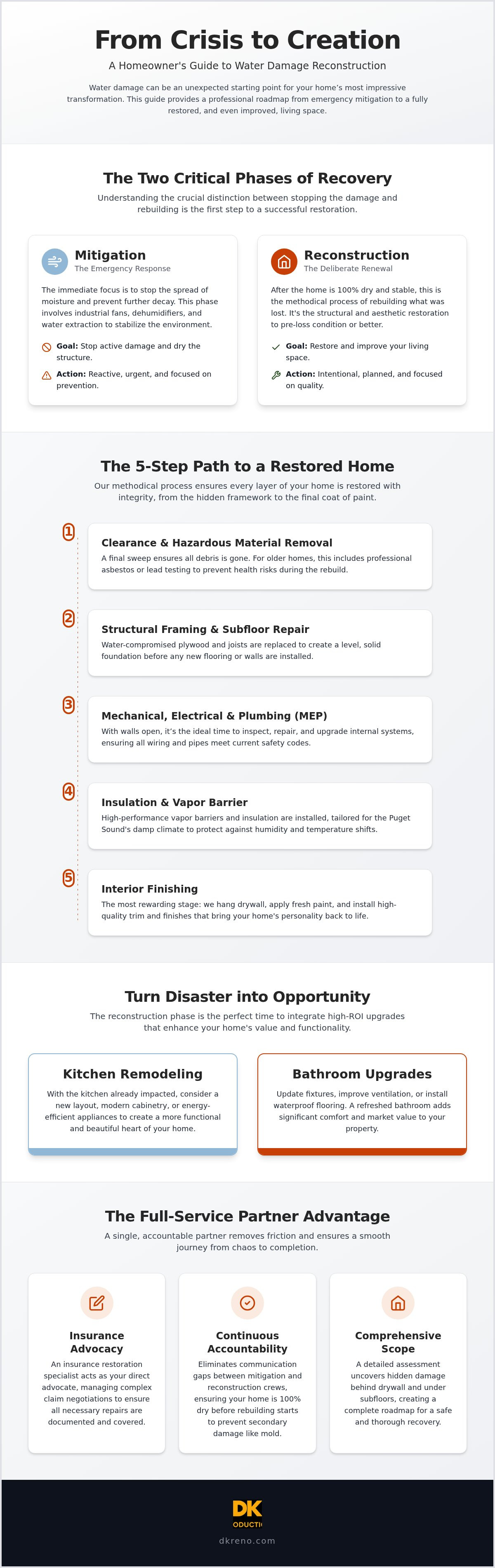
The immediate aftermath of a flood or pipe burst is defined by noise and urgency. While the hum of industrial dehumidifiers signals that the mitigation phase is underway, this is only the beginning of your journey back to normalcy. To effectively plan your recovery, you must understand what is water damage in the context of your home's long-term health. Mitigation focuses on stopping the spread of moisture and preventing immediate decay, while reconstruction is the deliberate process of rebuilding what was lost. Home reconstruction is the structural and aesthetic restoration of a property to pre-loss or improved condition.
The stabilization phase serves as the critical bridge between these two worlds. It’s the period where we ensure the "bones" of your home are not just dry, but ready to support new finishes. Moving from the chaos of emergency equipment to the precision of architectural plans requires a shift in mindset. You are no longer just reacting to a crisis; you are beginning the intentional renewal of your living space.
The Critical Hand-Off: Mitigation vs. Reconstruction
The transition from drying to rebuilding is often where homeowners experience the most friction. Using a single full-service firm like DK Production eliminates the communication gaps that occur when handing a project from a mitigation crew to a separate contractor. We ensure the structure is 100% dry before a single sheet of drywall is hung. Rushing into reconstruction before proper moisture levels are reached is a dangerous gamble that often leads to trapped mold and warped materials. By maintaining a continuous line of accountability, we protect your home from secondary damage and provide the peace of mind that your property is truly ready for its next chapter.
Assessing the Full Scope of Property Damage
A successful recovery depends on an exhaustive assessment that goes beyond surface-level aesthetics. Insurance adjusters often focus on visible signs of distress, but our specialists look for hidden damage behind drywall and under subfloors that could compromise your home's safety. We perform rigorous structural integrity checks to verify the stability of load-bearing walls and joists. This detailed investigation allows us to create a comprehensive Scope of Work. This document acts as your recovery roadmap, ensuring every necessary repair is documented for your insurance claim and every structural requirement is met during the home reconstruction after water damage.
The Structural Reconstruction Process: Restoring Your Home's Integrity
The transition from a dry, empty shell to a fully restored home is a methodical journey that transforms a stripped-back structure into a safe, beautiful living space. This phase of home reconstruction after water damage requires a disciplined approach to ensure that every repair meets modern safety standards while reflecting your personal style. We follow a logical sequence of five essential steps to move your project from chaos to completion.
Step 1: Final site clearance and hazardous material removal. Before rebuilding begins, we conduct a final sweep to ensure all debris is gone. For older homes in the Puget Sound area, this often includes professional asbestos or lead testing to prevent health risks during the rebuild.
Step 2: Structural framing and subfloor repair. Water often compromises the integrity of plywood and joists. We replace damaged wood to ensure you have a level, solid foundation before installing new flooring.
Step 3: Mechanical, Electrical, and Plumbing (MEP) updates. With the walls open, it's the ideal time to inspect and upgrade your home's internal systems. We ensure all wiring and pipes meet current safety codes.
Step 4: Insulation and vapor barrier installation. Our local climate is notoriously damp. We install high-performance vapor barriers and insulation tailored specifically for the Puget Sound's humidity and temperature fluctuations.
Step 5: Interior finishing. This is the most rewarding stage, where we hang drywall, apply fresh paint, and install high-quality trim work that brings your home’s personality back to life.
Navigating Permits and Local Codes in the Puget Sound
Each municipality, from Seattle to Shoreline and Everett, has unique permitting requirements that can impact your project timeline. In 2026, updated energy codes have become more stringent, often requiring homeowners to upgrade their insulation or windows during the reconstruction process. While homeowners rely on private insurance for most repairs, those affected by federally declared disasters should investigate FEMA housing assistance to understand the full range of recovery support available for structural needs. We manage the entire inspection process on your behalf, ensuring that every phase of your home reconstruction after water damage is fully compliant with local laws.
Addressing Invisible Threats: Mold and Air Quality
A beautiful home isn't truly restored if the air quality is compromised. We use professional-grade antimicrobial treatments on all exposed framing to prevent future mold growth. Additionally, HEPA air scrubbing and specialized deodorization equipment remove that lingering "musty" smell often associated with water incidents. If you're ready to move past the drying phase, our team at DK Production can help you visualize the finished result. Professional mold clearance is a prerequisite for closing a reconstruction project because it provides documented proof that the indoor environment is safe for occupancy.
Insurance Claims and Contractor Advocacy: Removing the Administrative Burden
Managing an insurance claim after a disaster often feels like a full-time job you never applied for. While a standard general contractor is skilled at following a blueprint, they often lack the specialized knowledge required to navigate the complexities of property recovery. You need an insurance restoration specialist who understands the language of adjusters and the technical requirements of the claims process. At DK Production, we assume the role of your project manager and advocate, ensuring that your carrier sees the full picture of the damage rather than just the visible surface issues.
Our team uses high-resolution photography and thermal imaging to document moisture intrusion that the naked eye might miss. This data-driven approach is essential for securing claim approval and ensuring that the budget for home reconstruction after water damage reflects the actual cost of restoration. We also help you decipher the difference between Actual Cash Value (ACV) and Replacement Cost Value (RCV). While ACV factors in depreciation, RCV allows you to rebuild with new materials of like kind and quality. Knowing which coverage you have is the first step in creating a realistic reconstruction budget that restores your home’s value.
Working with Your Claims Adjuster
The initial estimate provided by an adjuster is rarely the final word. As we begin the tear-out process, we often discover "hidden" damage, such as rotted framing or compromised electrical circuits, that wasn't visible during the first inspection. We handle these discoveries by filing "supplements," which are additional requests for funds based on newly identified needs. Avoiding common pitfalls, like accepting a low-ball initial settlement or failing to document every step, is vital for a successful outcome. For more guidance on this, read our detailed guide on Insurance Restoration Companies: How to Choose a Partner.
Administrative Support: From Paperwork to Payout
The financial side of reconstruction involves more than just writing a check. If you have a mortgage, your lender will likely be listed on the insurance checks and will release funds in stages called "draws." This administrative chaos can be overwhelming when you're already displaced from your home. We provide the stabilizing force you need by coordinating with both the insurance company and your mortgage provider. Our goal is a frictionless experience where the administrative burden is lifted off your shoulders, allowing you to focus on the eventual return to your restored home.
Turning Disaster into Opportunity: Remodeling During Reconstruction
While water damage is undeniably a crisis, it also presents a rare strategic opening to improve your home’s value and function. Most homeowners find that home reconstruction after water damage is the most cost-effective time to remodel because the structural "surgeries" are already underway. Since the walls are already open and flooring is already removed, the incremental cost of upgrading to premium materials is significantly lower than starting a renovation from scratch. This is your chance to reimagine your living space, moving beyond a simple repair toward a total property renewal that reflects your current lifestyle.
Selecting the right materials during this phase is about more than just aesthetics; it's about future protection. We help you choose premium, moisture-resistant options that offer better durability against the unique humidity of the Puget Sound. By investing in higher-quality subfloors or specialized insulation now, you're building a more resilient home that can better withstand the unexpected. This proactive approach turns a stressful event into a long-term investment in your property’s structural health and market value.
Kitchen and Bathroom Transformations
Bathrooms and kitchens are the highest-ROI areas of any home, and they're also the rooms most frequently impacted by plumbing failures. While we're restoring the structural integrity of these spaces, you can easily upgrade to custom cabinetry or stone countertops while the plumbing is fully accessible. If your project involves a bathroom, we highly recommend installing a waterproof shower remodel to provide leak-free luxury and long-term peace of mind. Integrating high-end finishes during kitchen remodeling ensures that your restored home isn't just fixed, but fundamentally better than it was before the loss.
Modernizing Your Home's Systems
A full-scale rebuild allows you to address functional flaws that existed long before the water damage occurred. You might choose to shift a non-load-bearing wall to create an open-concept layout or upgrade your electrical panel to support modern smart home features. If you've been considering a residential addition or a whole-house reconfiguration, the reconstruction phase is the logical time to integrate those plans into the project. We focus on improving floor plans for better flow and "whole-house" functionality, ensuring every square foot of your home is optimized for your family’s needs. If you're ready to turn your property crisis into a high-value upgrade, our team at DK Production is here to manage every detail of your transformation.
Choosing a Reconstruction Partner in the Puget Sound Region
The final choice of a contractor is often the most significant decision you will make in your recovery journey. In the Puget Sound region, local expertise is not just a preference; it is a necessity for navigating the specific environmental and regulatory challenges of our area. A partner who understands the unique architectural styles and soil conditions of Arlington, Kirkland, and Bothell can anticipate issues that national franchises might overlook. By choosing a firm that offers full-service accountability, you secure a single point of contact from the initial water mitigation through to the final coat of paint. This continuity eliminates the communication gaps between different crews and ensures that the standards established during the stabilization phase are maintained throughout the entire home reconstruction after water damage.
We believe in a "Compassionate Specialist" approach that balances technical rigor with empathetic service. Property damage is deeply personal, and we treat every project as a legacy of renewal. Our commitment to returning your home to a high-quality finished state is rooted in the belief that you shouldn't just get your house back; you should get a better version of it. This focus on the complete duration of a project is what allows us to act as a stabilizing force for our clients.
What to Look for in a Washington State Contractor
Selecting the right team requires looking beyond the initial estimate. You must verify that your contractor holds valid Washington state licensing and comprehensive insurance to protect your investment. A proven track record of Arlington water damage success is a strong indicator of a firm’s ability to handle the complexities of local property recovery. When vetting potential partners, prioritize these qualities:
Transparent Communication: A partner who provides a clear, methodical timeline for your recovery.
Full-Service Capability: Expertise in both emergency restoration and high-end residential remodeling.
Local Accountability: A firm with a physical presence and a reputation to maintain in the Puget Sound community.
Getting Started with DK Production
Your path to property renewal begins with an initial consultation that goes deeper than a simple walkthrough. We assess the physical state of your home while also reviewing your insurance policy to identify the best path forward for your home reconstruction after water damage. This collaborative process allows us to craft a vision for your home’s renewal that maximizes your future property value and comfort. By assuming the administrative and technical burden of the crisis, we allow you to take the first step toward normalcy with confidence. We don't just repair walls; we restore the peace of mind that comes from knowing your home is in the hands of a protective, reliable specialist.
Reclaiming Your Home and Your Peace of Mind
Navigating the aftermath of a property loss is one of the most stressful experiences a homeowner can face. By understanding the critical transition from emergency mitigation to structural rebuilding, you can ensure your property is not just dried out, but fundamentally restored. The administrative burden of insurance claims doesn't have to rest on your shoulders. A dedicated partner acts as your advocate, managing the complex documentation and negotiations required to secure a fair settlement. This process also provides a unique chance to implement high-ROI upgrades that enhance your home’s value and comfort for years to come.
We've served the Puget Sound area since 2014, acting as a stabilizing force for families in crisis. As A+ rated insurance restoration specialists, we provide a frictionless experience from the first industrial fan to the final high-end finish. If you're ready to move beyond the chaos of a construction zone, it's time to choose a partner who assumes the burden of the crisis on your behalf. Start Your Home's Renewal Today with DK Production and take the first step toward a successful home reconstruction after water damage. You deserve a home that feels like yours again, and we're here to help you rebuild with confidence.
Frequently Asked Questions
How long does the home reconstruction process take after water damage?
The duration of the reconstruction process typically ranges from a few weeks for minor repairs to several months for extensive structural restoration. Your timeline depends on the severity of the damage, the lead times for custom materials, and the speed of local permit approvals in the Puget Sound. We provide a methodical schedule at the start of every project to help you plan your return to normalcy with confidence and clarity.
Can I upgrade my kitchen or bathroom during the reconstruction process?
You can certainly upgrade your kitchen or bathroom during the reconstruction phase. In fact, this is the most cost-effective time to remodel because the structural elements are already exposed and the labor for demolition is already complete. Whether you want custom cabinetry or stone countertops, we can integrate these high-value design upgrades into your recovery plan to ensure your finished home is even better than it was before the loss occurred.
Will my insurance cover the full cost of reconstruction?
Most homeowner's insurance policies cover the cost to restore your property to its pre-loss condition using materials of like kind and quality. While your insurance pays for the necessary repairs, any elective upgrades or remodeling choices are typically paid out of pocket. We act as your advocate during negotiations to ensure the adjuster’s estimate accurately reflects the real-world costs of home reconstruction after water damage, protecting you from underfunded claims.
Is it safe to live in my home during the reconstruction phase?
Safety depends on the location and scale of the repairs within your home. If the damage is localized to a single bathroom, you may be able to stay, but extensive structural work often makes the environment uninhabitable due to noise, dust, and lack of essential utilities. We prioritize your family's safety and will provide a professional recommendation based on the project’s scope, ensuring you don't face unnecessary health risks during the rebuild.
What is the difference between water mitigation and water reconstruction?
Water mitigation is the emergency phase focused on extraction, drying, and stabilization to prevent further decay or mold. In contrast, home reconstruction after water damage is the subsequent phase where we rebuild the structural and aesthetic elements of the property. Mitigation stops the crisis, while reconstruction provides the permanent solution. Using a full-service firm ensures a frictionless transition between these two distinct but equally critical stages of property recovery.
Do I have to use the contractor my insurance company recommends?
You have the legal right to choose any licensed contractor you trust to perform the work on your home. While insurance companies often provide a list of "preferred vendors," these firms may prioritize the insurer's costs over your long-term satisfaction. Selecting an independent specialist ensures you have a dedicated advocate who is committed to high-quality standards and your personal vision for the final finished state of your property.
How do I ensure mold won't return after the reconstruction is finished?
Preventing mold return requires ensuring the structure is 100% dry before any new materials are installed. We use professional-grade moisture meters to verify that framing and subfloors have reached safe levels, followed by the application of antimicrobial treatments to all exposed surfaces. Professional mold clearance testing is a prerequisite for our projects, providing you with documented proof that your home's air quality is safe and the environment is healthy.
What permits are required for home reconstruction in Seattle or Everett?
The specific permits required depend on your location and the extent of the structural changes. In Seattle and Everett, you typically need a combination of building, electrical, and plumbing permits for any significant restoration work. Current 2026 building codes also require specific energy efficiency upgrades during the rebuild process. We manage the entire permitting and inspection workflow on your behalf to avoid project delays and ensure your home meets all local safety regulations.


Comments