
Water Damage Restoration Costs in Snohomish County

A water-damaged room can involve very different restoration costs, depending on what got wet and how far the damage spread. The water damage restoration cost in Snohomish County depends on the work required, from water extraction and structural drying to repairing damaged materials.
It’s understandable to want a clear estimate before deciding what to do next. This article explains the factors that shape the scope of work, including basement water extraction, flood cleanup, and emergency response. DK Production Restoration is a restoration company that provides water mitigation, restoration, and reconstruction for residential water damage, and handles insurance claims directly for homeowners.
Table of Contents
What is the typical cost for water damage restoration?
There is no single restoration price that fits every Snohomish County home. The water damage restoration cost in Snohomish County depends on the water source, affected materials, mitigation, and repairs; an inspection defines the scope.
Insurance Coverage and Exclusions
Homeowners insurance coverage depends on the policy and the circumstances that caused the damage. Review the sections addressing the water source, cleanup, mitigation, damaged materials, and exclusions, including any language about gradual leaks or flooding. A covered claim does not automatically mean every repair is covered, so compare the adjuster’s scope with the policy terms.
For context, the median paid water damage claim in Snohomish County was $25,034 from 2023 to 2026. That claim figure is not a restoration quote or a promise about what an individual policy will pay. The deductible and coverage limits also affect the amount a homeowner may receive.
Repairs and Adjuster Coordination
Coordinating with the adjuster connects inspection findings to the proposed cleanup and repair scope. The restoration estimate should identify affected rooms, materials, and work so the adjuster can assess the documented damage. If an inspection reveals wet carpet beneath flooring or moisture near an appliance, those findings can help explain a change in scope.
Keep communication focused on specific items: what was damaged, what work is proposed, and which estimate or claim document describes it. If the adjuster’s scope differs from the observed damage, provide the relevant inspection notes and photographs for review. Coverage decisions depend on the policy and claim circumstances.
Documentation, Claims, and Billing
Clear records connect the source of water with the work completed. Useful claim documents include dated photographs, inspection findings, an itemized scope, invoices, and notes describing changes during cleanup. Group records by room or affected area, such as a basement carpet, kitchen appliance, or damaged ceiling, so each cost can be matched to its location.
Keep mitigation and repair charges distinguishable in the paperwork. Mitigation covers immediate water-related work, while reconstruction estimates describe repairs to damaged building materials. Submit documents through your insurer’s claim process and retain copies of estimates, invoices, and adjuster communications. This creates a traceable record if questions arise about billing or differences between the initial and final scope.
What Determines the Estimate?
An estimate reflects the source and spread of water, the materials affected, and the work needed to restore them. Water contained in one area may require a different scope from water that has reached multiple rooms or hidden building materials. Inspection findings help identify affected areas and distinguish cleanup from repair work.
The price depends on the case and is given after a quote request; the scope, affected materials, water source, and required repairs shape it. In Everett, as elsewhere in the county, an inspection provides the practical basis for describing the work rather than assuming every water incident needs the same response.
Licenses, Certifications, and Permits in Washington
Which licenses, certifications, or permits are required for water damage restoration work in Washington State? Requirements depend on the specific work involved, such as cleanup versus reconstruction, and the jurisdiction. There is no blanket requirement for every restoration job without defining its scope. Include repair work in the inspection and estimate so related requirements can be considered.
Structural drying of floors, walls, ceilings, and cabinets
Structural drying removes trapped moisture after visible water is extracted. The affected materials and enclosed spaces determine the drying plan.
Water Extraction and Structural Drying
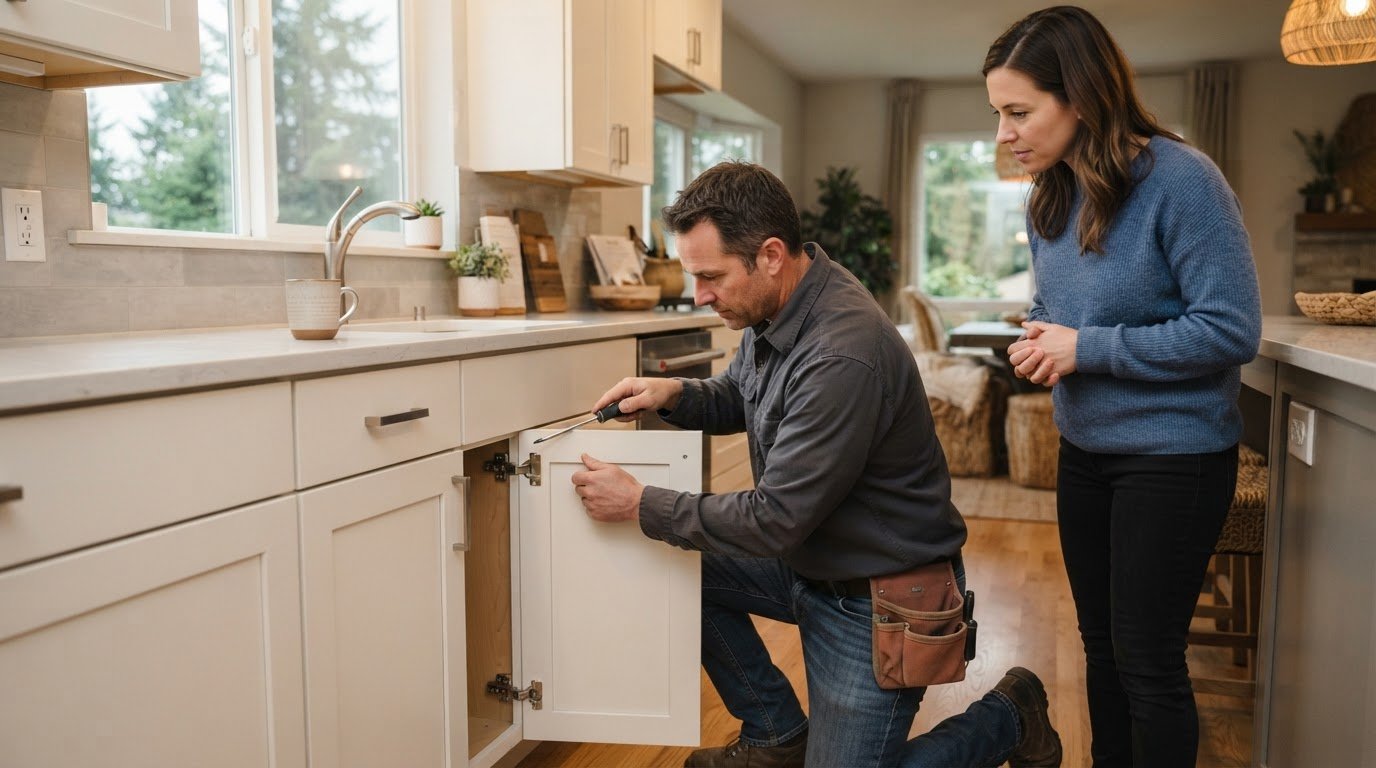
Water extraction removes standing water before drying begins. Technicians then assess floors, walls, ceilings, and cabinets for moisture that may remain beneath visible surfaces. For example, water on a kitchen floor can seep beneath cabinets and into adjoining wall cavities. Drying those structural areas requires identifying where moisture has traveled, not just treating the wettest-looking surface.
The work proceeds area by area: extract water, inspect materials, then dry affected spaces. Carpet may conceal damp flooring, while a ceiling stain can indicate moisture above the visible mark. An inspection helps distinguish surface cleanup from drying inside building materials. That difference shapes equipment placement and the work required before repairs can begin.
Drying Equipment and Moisture Monitoring
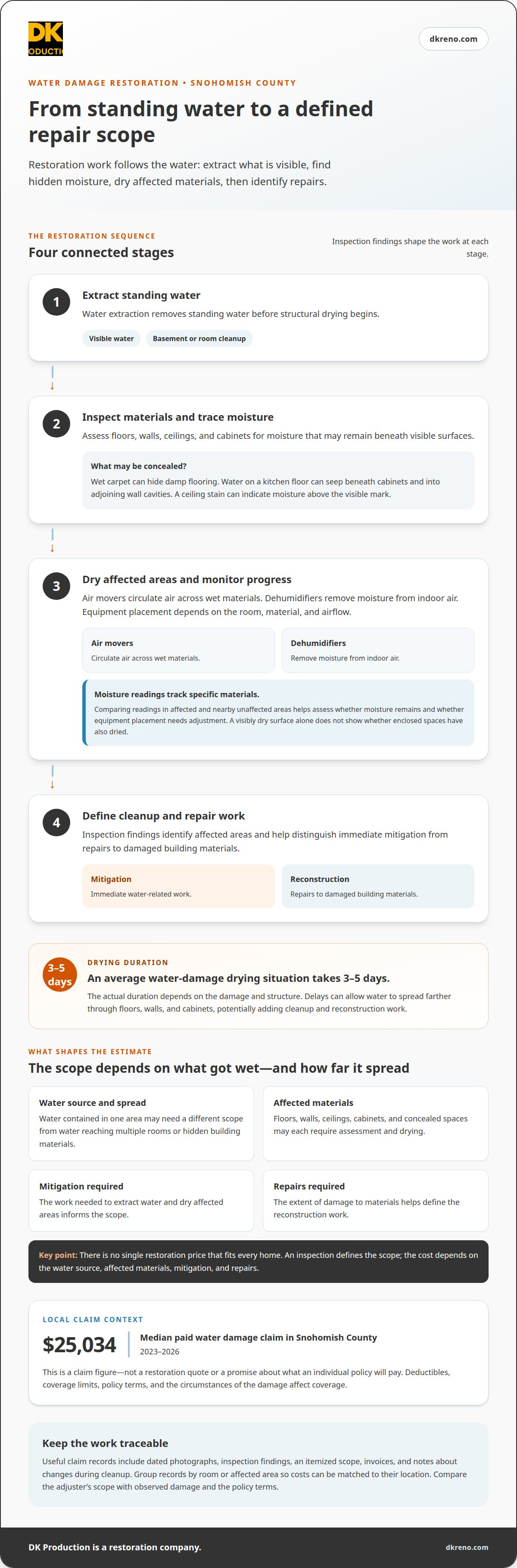
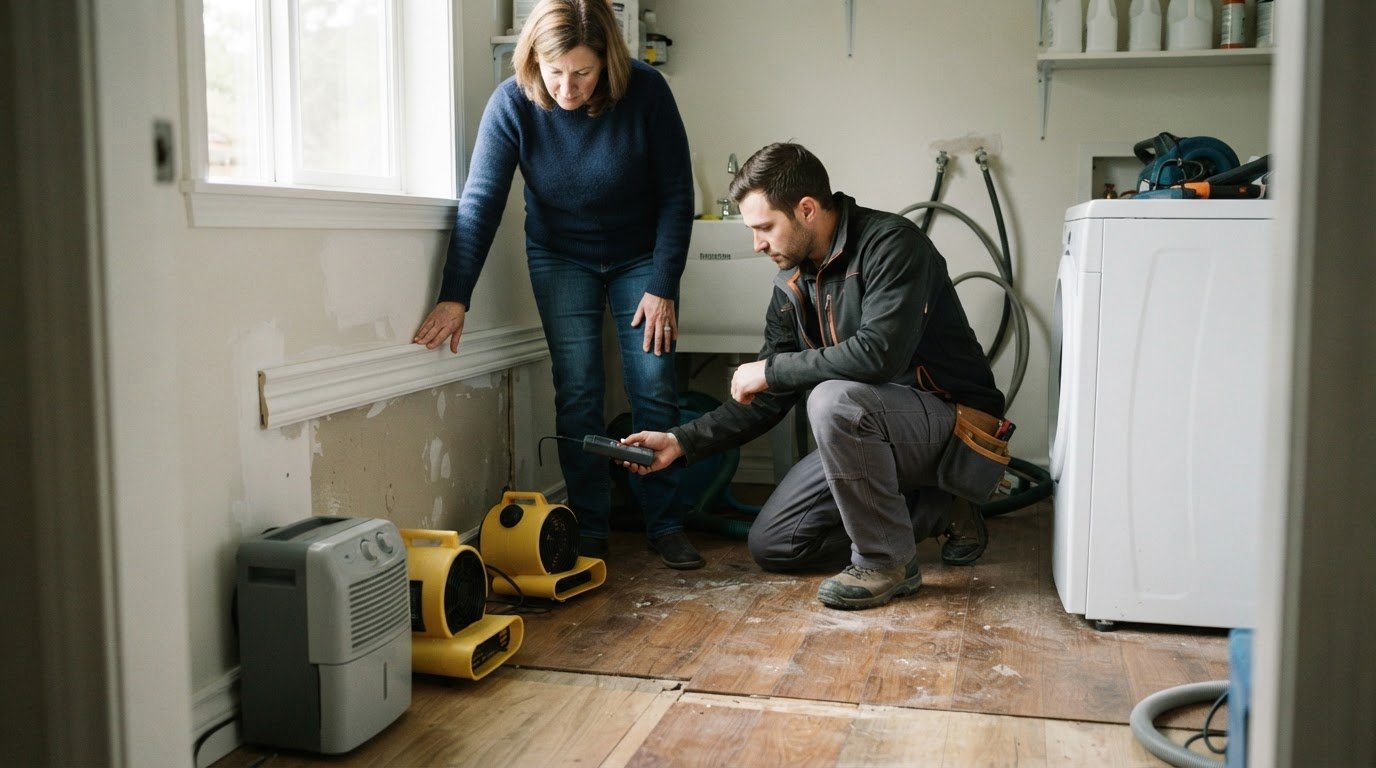
Air movers circulate air across wet materials, while dehumidifiers remove moisture from indoor air. Their placement depends on the affected room, material, and airflow. A closed cabinet or wall cavity may need a different approach from an open floor. Moisture readings help track progress in specific materials rather than relying on touch or appearance alone.
Monitoring compares readings in affected areas as drying continues. For example, a damp section of flooring can be measured alongside a nearby unaffected area. Those readings help determine whether moisture remains in the structure and whether equipment placement needs adjustment. A visibly dry surface alone does not show whether enclosed spaces have also dried.
Cost Effects of Drying Delays
Delays can allow water to spread farther through floors, walls, and cabinets. The longer water remains, the more materials may need inspection, removal, or repair. A small wet area can become a wider structural problem if moisture travels into concealed spaces.
An average water-damage drying situation takes 3-5 days, though damage and structure affect the duration. Starting promptly can limit how much material remains wet, while a delay may add cleanup and reconstruction work. A professional assessment connects the drying plan to the affected materials and the moisture readings gathered during the process.
The price depends on the affected materials, moisture spread, equipment needs, and repairs; the exact figure is provided in a quote for your case. Clear readings and a defined scope help explain why one room needs different work from another. For an overview of restoration planning, consider how extraction, drying, and repairs fit together.
Flood cleanup and basement water extraction
Basement flooding can affect finished rooms, storage areas, and concealed building materials. The cleanup scope depends on the water source, contamination category, and materials requiring removal.
Basement and Crawl-Space Cleanup
Basement water removal starts with assessing standing water and affected areas. A finished basement may have wet carpet, drywall, stored belongings, and flooring that need separate evaluation. Crawl-space cleanup focuses on water beneath the home, where access and damp materials shape the work. Both areas need an inspection to identify where the water traveled.
After extraction, the scope may include removing damaged materials and drying the remaining structure. For example, water beneath basement flooring can affect materials beyond the visible wet area. Crawl-space findings can also inform repairs to affected components. A clear record of each location connects cleanup work with the damage documented for an insurance claim.
Water Categories and Cleanup
Restoration assessments commonly distinguish clean, gray, and black water. These categories describe different contamination concerns, so the water source matters when planning cleanup. A supply-line leak is assessed differently from water involving a drain or sewage backup. The category can influence which materials are kept, cleaned, or removed.
Category 1 water in Snohomish County can degrade into Category 2 within 24-48 hours if untreated. That makes the timing and source relevant to the inspection. Technicians document affected areas and choose cleanup measures based on the observed conditions. A category label helps explain the work, but the full scope also depends on where water reached.
Sewage and Flood Damage Cleanup
Sewage backups and floodwater require an assessment of both the source and the materials contacted. Cleanup may involve water removal, damaged contents, and affected drywall or flooring. Floodwater entering a basement can spread beyond one room, so the inspection maps connected areas before removal and repairs begin.
Air movers may support drying after water extraction, while the cleanup plan addresses materials that cannot remain. The estimate can separate extraction, removal, and repair tasks for easier review. For an insurance claim, photographs and notes showing the affected rooms help the adjuster understand how flood or sewage damage shaped the work.
Cleanup and Material Removal
Material removal is based on inspection findings, not appearance alone. Wet drywall, carpet, and insulation may need separate evaluation because water can travel behind finished surfaces. Technicians document what is removed and where it came from, connecting observed damage with the cleanup scope.
After removal, the remaining area can be assessed for drying and repairs. For example, removing a wet section of basement drywall may reveal additional affected materials that need inspection. That discovery can change the documented scope. A step-by-step record helps distinguish necessary removal from later reconstruction and supports clear communication with the adjuster.
Emergency water damage response
During flooding, response timing can affect how far water travels through a home. A burst pipe, standing water, and wet insulation each call for a prompt assessment.
Emergency Response Times and Availability
Emergency response time means how quickly a restoration team can assess affected areas and begin appropriate work. Ask what the stated response window covers: a return call, arrival, inspection, or water removal. These are different milestones. A 24/7 label describes availability for contact, not a guaranteed arrival time or a specific arrival window.
In Snohomish County, a burst pipe found a week later can cost as much as five times more than the same leak addressed the same morning. The longer water remains, the more building materials may become affected. The source, standing water, and moisture in insulation all help define the next steps.
Emergency and After-Hours Fees
Do Snohomish County water damage restoration companies charge emergency or after-hours fees? There is no single countywide fee stated here; charges and billing terms depend on the provider and the work. Review the written estimate for any separate emergency, after-hours, water-removal, or mitigation charges before work proceeds.
The price depends on the damage, response needs, affected materials, and required work; the exact figure is given in a quote for your case. A written scope helps distinguish emergency water removal from later drying or repairs. If an insurance claim is involved, keep the estimate and related records with claim documents.
Immediate Homeowner Steps
What immediate steps do water damage restoration professionals recommend homeowners take to reduce costs and risks? If it is safe, shut off the main water valve, turn off power to wet areas, move valuables somewhere dry, and photograph the damage before cleanup. These actions can help limit further water entry and preserve a record of affected rooms.
Safety comes first. Don’t enter a wet area to reach an electrical panel or valve if doing so could expose you to danger. Photographs of a burst pipe’s location, standing water, and damaged belongings can document conditions before cleanup changes them. Share those details during the assessment so the team can understand the source and extent of flooding.
For example, water from a burst pipe may reach flooring, drywall, and insulation beyond the first visible puddle. An inspection should identify those affected areas and record the work needed. Keep photographs and the written scope together if you’re submitting an insurance claim. A clear sequence, from stopping the source when safe to documenting damage, supports an organized response.
DK Production Restoration: Water damage
DK Production provides water mitigation, restoration, and reconstruction to help homeowners address water damage. Turn to the team when water has affected your home and you need a professional assessment of the damage and the work required to move from mitigation toward repairs.
A clear scope connects affected areas with restoration work, helping you understand the steps involved in returning your home to a finished, usable condition. The next step is to discuss what happened, which parts of your home were affected, and what needs attention.
Contact DK Production Restoration to discuss water damage in your home.
Make a Clear Plan for Your Home
Once you understand what shapes water damage restoration cost in Snohomish County, the next step is turning the situation in your home into a clear scope of work. A professional assessment connects affected areas with the restoration decisions ahead, helping you understand what needs attention and how the work can move forward.
Every home and water event is different. Share what you know about the source, the rooms affected, and any visible changes since the damage began. Those details give the restoration team a practical starting point for discussing mitigation and reconstruction needs. If you’re working with an insurer, keep the assessment and related claim records together as the project progresses.
DK Production Restoration offers restoration, water mitigation, and reconstruction for residential water damage. If you’re ready to discuss the next step for your home, contact DK Production Restoration. A focused conversation can help you move from uncertainty toward a plan for restoring your space.
Frequently Asked Questions
Does it cost more to restore an older home?
Not automatically; the home’s age alone doesn’t determine the restoration scope. Snohomish County has homes dating from the 1900s through new construction, and each property’s affected materials and access points differ. For example, an inspection may find damage limited to one finish or extending behind it. The estimate reflects the work needed for the conditions found, not simply the home’s construction date.
How do I get an exact price?
An exact price comes from an assessment of the damage and a written scope for your home. Share what you know about the water source, the affected rooms, and any changes you’ve noticed. Photos can help show conditions before cleanup alters them. The estimate should connect observed damage with proposed work, so you can understand what the scope includes and discuss it alongside claim paperwork if applicable.
How long does the drying process take?
An average water-damage drying situation takes 3-5 days, though the structure and extent of damage affect the duration. A room with wet flooring may dry differently from a space where moisture has reached wall cavities or cabinets. Restoration professionals track moisture readings in affected materials during drying, then use those readings to assess progress rather than relying only on whether surfaces look dry.
How much does it cost to dry out a flooded basement?
There isn’t one scope that applies to every flooded basement. It depends on the damage and work required in your case. An estimate considers the water source, affected rooms, materials, extraction needs, and any repairs. A basement with water limited to one area has a different scope from one with wet flooring, damaged drywall, or water reaching concealed spaces.
Is it safe to stay in a flooded home?
Don’t enter standing water where electrical equipment or wiring may be affected. Keep people away from flooded areas until the hazard has been assessed, and leave the home if conditions make it unsafe to remain. Restoration professionals can evaluate affected spaces and identify the work needed. If it’s safe to do so, turn off power to wet areas without entering them.
Will insurance pay for it?
Insurance payment depends on your policy and the circumstances that caused the damage. A sudden burst pipe and a gradual leak may be treated differently under policy terms, so review the applicable coverage and exclusions. Keep photos, inspection records, and the proposed scope together with claim correspondence. Your insurer’s decision depends on the policy and documented claim details, not simply on the fact that water damage occurred.

Comments